Table of Contents
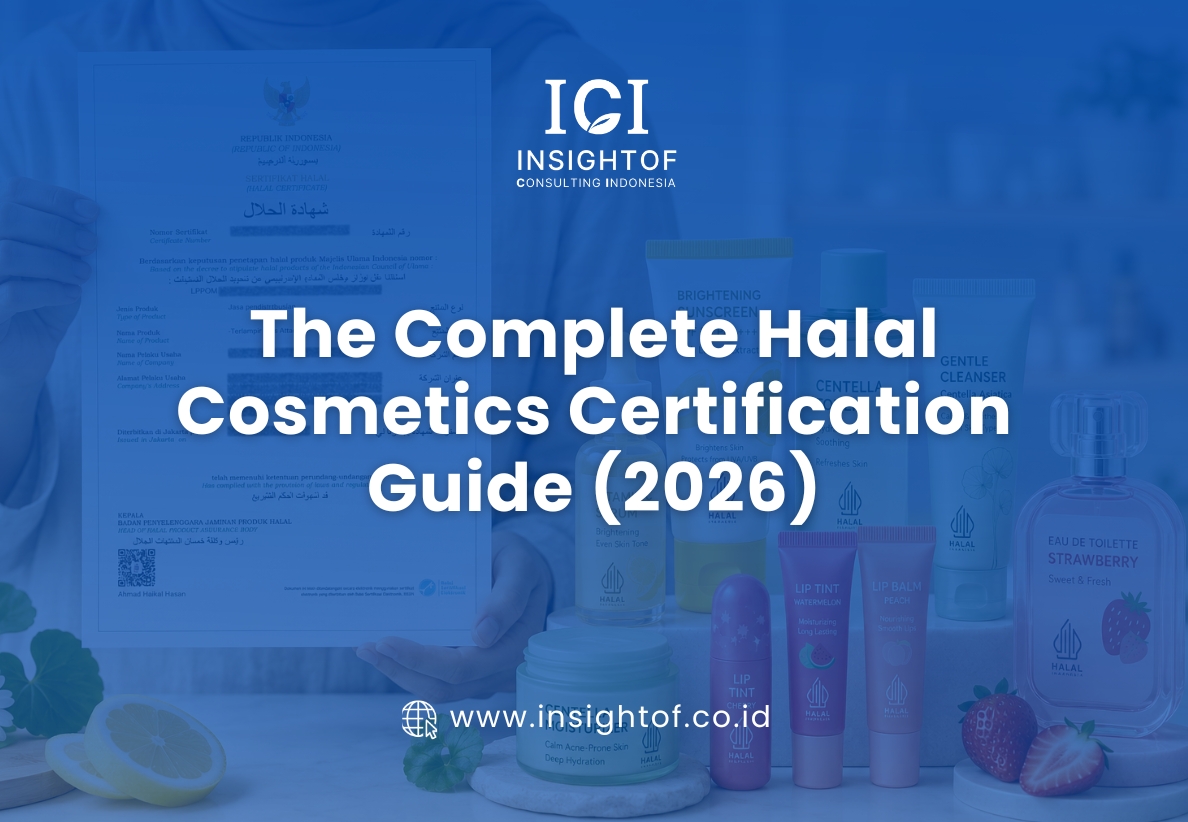
Indonesia’s cosmetics industry is heading toward a hard deadline. Starting October 17, 2026, every cosmetic product sold in the country must carry a valid halal certificate, according to the Halal Product Assurance Organizing Body (BPJPH). This guide walks through what that requirement actually involves, so both large manufacturers and small cosmetics businesses can prepare early and avoid last-minute setbacks.
Whether you run a factory-scale operation or a growing indie skincare line, understanding this process now helps you sidestep penalties later, and it gives your brand a real edge in an increasingly halal-conscious market.
1. What Is Halal Cosmetics Certification?
Halal cosmetics certification is the official recognition that a cosmetic product, from its raw materials to its finished form, meets Islamic law’s standards for permissibility. The process examines several layers: the ingredients themselves, how the product gets manufactured, the facility where production happens, and the internal system a company uses to maintain halal compliance over time.
In Indonesia, BPJPH oversees the entire certification system. It works alongside accredited Halal Inspection Bodies (LPH), which handle audits, while the Indonesian Ulema Council (MUI) makes the final religious determination through its Fatwa Commission. Together, these three institutions form the backbone of the certification process.
For cosmetics companies, this isn’t just a legal box to check. Certification also builds consumer trust and strengthens a brand’s competitive position, especially with shoppers who actively look for the halal logo before buying.
2. Indonesia’s Halal Cosmetics Regulation in 2026
Understanding the legal foundation matters just as much as understanding the paperwork. BPJPH has confirmed that cosmetic products must hold halal certification no later than October 17, 2026, and this requirement covers a broad range of product types.
| Product Category | Covered Under the 2026 Mandate? |
|---|---|
| Skincare | Yes |
| Makeup | Yes |
| Hair care products | Yes |
| Body care products | Yes |
| Perfume and fragrance | Yes |
3. Requirements and Documents You’ll Need
Before applying, businesses need to gather a specific set of documents. Missing paperwork is one of the most common reasons applications get delayed, so it helps to prepare everything in advance.
- Business legality documents — NIB (Business Identification Number), NPWP (tax ID), and relevant business licenses
- Product data — a complete list of cosmetic products and variants covered by the application
- Halal ingredient documentation — a full list of raw materials with their halal status
- Supporting ingredient documents — halal certificates for individual ingredients where available, or supporting documents such as Certificates of Analysis (CoA), product specifications, and process flow diagrams
- Production process flow diagram — a clear map of how the product moves from raw material to finished good
- Facility photos — visual documentation of the production site
- Halal Product Assurance System (SJPH) documentation — the company’s internal system for maintaining halal compliance
Imported raw materials add another layer of complexity. If an imported ingredient already carries a halal certificate, that certificate needs formal registration with BPJPH. If it doesn’t, you’ll need extra documentation from the manufacturer in the country of origin, including a Certificate of Analysis, a process flow diagram, and a full ingredient composition list.
4. The Certification Process, Step by Step
Knowing the full sequence helps prevent the process from stalling partway through. Here’s how it unfolds from start to finish.
- 1Register on the SIHALAL System. Create a company account through BPJPH’s SIHALAL platform, fill in legal data, list your products, and upload every required document. Accuracy matters here — even small input errors can delay the entire process, so double-check that everything matches your official company records.
- 2Administrative Verification by BPJPH. BPJPH reviews your submission to confirm all documents are complete and meet requirements. If anything is missing or inconsistent, your application gets sent back for correction before moving forward. Well-organized, complete documentation at this stage speeds up everything that follows.
- 3Audit by the Halal Inspection Body (LPH). Once you clear administrative verification, an accredited LPH conducts a full audit, covering both document review and an on-site visit. Auditors check your raw material list and sourcing, confirm no haram or doubtful ingredients are present, inspect your facility and production process, and verify your SJPH implementation.
- 4Fatwa Session at MUI. The audit results move to the Indonesian Ulema Council’s Fatwa Commission, where religious scholars review the findings and determine whether the product meets halal standards. If they flag any issues, your business needs to resolve them before a final decision gets made. This session is the true turning point in the entire process, since halal status becomes official here.
- 5Certificate Issuance. Once the Fatwa Commission approves your product, BPJPH issues the official Halal Certificate, and you can download it directly from your SIHALAL account. From this point, you’re free to place the halal logo on your packaging, following the applicable labeling rules.
5. Tips to Speed Up Certification
Thorough preparation from the outset makes the biggest difference in how smoothly certification goes. Start by confirming that every raw material has clear, verifiable supporting documentation, and build your SJPH according to BPJPH’s standards from the beginning, rather than patching it together after receiving feedback.
Beyond that, run an internal review before you submit your official application. Checking your documents and facility readiness ahead of time helps you catch potential audit issues before an LPH auditor does, which saves valuable time down the line.
6. Conclusion
The October 17, 2026 halal certification deadline for cosmetics isn’t just another regulatory formality. It reflects a broader shift toward transparency and consumer trust across Indonesia’s beauty industry. Businesses that start preparing now, rather than waiting until the deadline approaches, gain a real competitive advantage over those that delay.
Begin by organizing your documentation, verifying the halal status of every ingredient, and understanding the full registration flow through BPJPH. With solid preparation, the certification process moves faster, runs more smoothly, and involves far fewer obstacles along the way.
Frequently Asked Questions
What products fall under Indonesia’s 2026 halal cosmetics mandate?
The requirement covers skincare, makeup, hair care products, body care products, and perfume. All of these categories need valid halal certification by October 17, 2026.
Which institutions handle halal cosmetics certification in Indonesia?
BPJPH administers the certification system, an accredited Halal Inspection Body (LPH) conducts audits, and the Indonesian Ulema Council (MUI) makes the final halal determination through its Fatwa Commission.
What happens if imported raw materials don’t have a halal certificate?
You’ll need additional documentation from the manufacturer in the country of origin, including a Certificate of Analysis, a process flow diagram, and a full ingredient composition list, to support the halal review.
Which ingredients receive the closest scrutiny during a halal audit?
Auditors pay particularly close attention to animal-derived ingredients, alcohol, collagen, glycerin, and other active substances, since these materials most often carry unclear or non-halal sourcing.
What’s the fastest way to avoid delays during certification?
Prepare complete, accurate documentation before you apply, build your Halal Product Assurance System (SJPH) according to BPJPH standards from the start, and run an internal readiness review before submitting your official application.
Ready to Start Your Halal Cosmetics Certification?
INSIGHTOF Consulting Indonesia helps cosmetics businesses prepare documentation, build SJPH systems, and navigate the full BPJPH certification process ahead of the October 2026 deadline.