Table of Contents
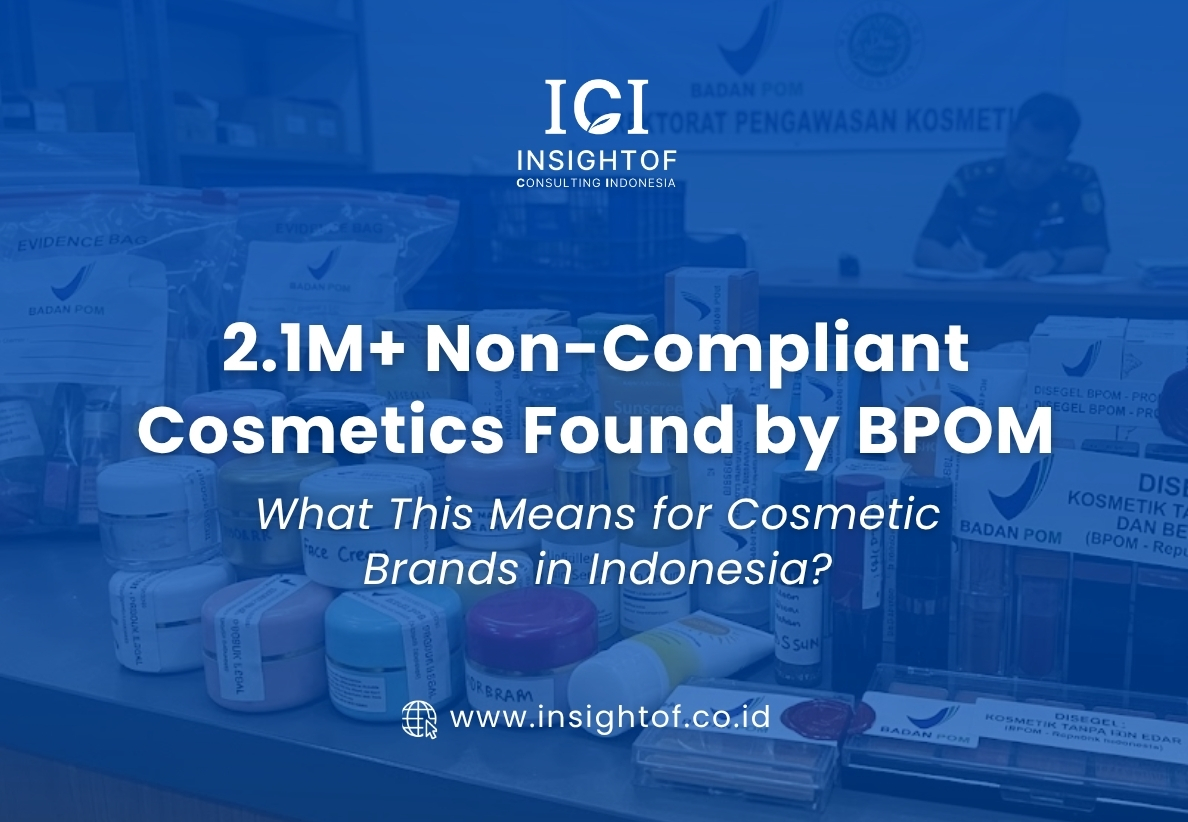
Indonesia’s National Agency of Drug and Food Control (BPOM) has just released the results of its 2026 cosmetics surveillance intensification, and the numbers are hard to ignore. More than 2.1 million pieces of non-compliant cosmetics, worth an estimated Rp35.8 billion, turned up in a nationwide sweep, with millions more flagged online.
BPOM Head Taruna Ikrar presented the findings at a press conference on July 13, 2026, at the Gedung Merah Putih auditorium in Jakarta. This article breaks down what the crackdown uncovered, why online platforms like TikTok Shop are drawing extra scrutiny, and what it all means for cosmetics brands operating legitimately in Indonesia.
1. Introduction
BPOM’s cosmetics surveillance isn’t new, but the scale of this year’s findings underscores just how large Indonesia’s illegal cosmetics trade remains. According to Taruna Ikrar, these results show that illegal cosmetics circulation is still widespread, making consumer vigilance more important than ever.
The enforcement effort covered two fronts simultaneously: physical distribution facilities across the country, and online sales channels, with particular attention paid to e-commerce and social commerce platforms where beauty product sales have surged.
2. The Numbers Behind the Crackdown
The nationwide sweep ran simultaneously across Indonesia from May 11 to May 22, 2026. Here’s a snapshot of what BPOM uncovered:
3. What BPOM Found in Physical Distribution Channels
Inspectors checked 190 distribution facilities and found 128 of them, more than two-thirds, in violation of applicable rules. Across those facilities, BPOM identified 2,205 problematic cosmetic items, broken down into four categories.
| Violation Type | Share of Findings |
|---|---|
| Illegal cosmetics (no valid notification) | 86.83% |
| Imported cosmetics without import certification documents | 12.58% |
| Cosmetics containing hazardous or prohibited materials | 0.32% |
| Cosmetics used outside the legal definition of “cosmetic” | 0.27% |
According to Taruna Ikrar, illegal imported cosmetics dominated the findings, accounting for more than 90% of the violations identified across physical distribution channels.
4. Where the Violations Concentrated
Geographically, three areas accounted for the largest share of findings: Tangerang, Bogor, and Jakarta. These regions sit within Greater Jakarta’s dense distribution and logistics networks, which likely contributes to their prominence in the results.
5. Why TikTok Shop and Online Marketplaces Are Under the Microscope
This year’s surveillance placed particular emphasis on online media, and the reasoning comes down to where the money is. According to data presented by BPOM, the beauty, personal care, and skincare category ranks as the highest-revenue product category on TikTok Shop, generating approximately Rp35.61 trillion in sales with growth of 79.73%.
That scale of transaction volume creates exactly the kind of opportunity that bad actors exploit. As Taruna Ikrar put it, this condition gets exploited by irresponsible parties to distribute illegal or non-compliant cosmetics.
6. What BPOM Found Online
Beyond physical facilities, BPOM identified 9,042 online links violating cosmetics circulation regulations, with an estimated economic value of roughly Rp260.7 billion, nearly seven times higher than the value found in physical distribution channels.
The breakdown of online violations mirrors the offline pattern, but skews even more heavily toward illegal products: 95.24% illegal cosmetics, followed by 4.66% containing hazardous or prohibited materials.
7. BPOM’s Next Steps
As a follow-up measure, BPOM has recommended taking down the illegal cosmetics sales links it identified, coordinating with Indonesia’s Ministry of Communication and Digital Affairs as well as the Indonesian E-Commerce Association (idEA).
Taruna Ikrar also invited all stakeholders, platforms, sellers, distributors, and consumers alike, to take an active role in ensuring cosmetics circulation in Indonesia stays safe, high-quality, and compliant with regulations.
8. What This Means for Legitimate Cosmetic Brands
For brands that are properly registered, this level of enforcement is ultimately good news, it narrows the gap between compliant and non-compliant competitors, and it puts pressure on the illegal imports and unregistered sellers that erode consumer trust across the entire category. But it also carries a few practical implications worth acting on.
- Verify your own registration status is current — with over 2 million non-compliant units found, it’s worth confirming your BPOM notification, labeling, and import documentation are fully up to date, not just filed once and forgotten
- Watch for counterfeit or unauthorized listings of your own products — the online findings show marketplaces and social commerce platforms carry real exposure; monitoring for unauthorized resellers protects both consumers and your brand’s reputation
- Treat visible compliance as a competitive advantage — as enforcement intensifies and consumer awareness grows, clearly displayed BPOM notification numbers become a genuine differentiator, not just a formality
- Don’t assume authenticity equals compliance — genuine imported products still require proper Indonesian registration and import documentation to be sold legally
9. Conclusion
BPOM’s 2026 findings paint a clear picture: illegal cosmetics remain widespread in Indonesia, both through traditional distribution channels and, increasingly, through fast-growing online platforms like TikTok Shop. Imported products without proper documentation account for the large majority of what’s being found, and online violations now carry a far higher estimated economic value than physical ones.
For cosmetics brands genuinely committed to the Indonesian market, the takeaway is straightforward: proper BPOM registration and import documentation aren’t optional formalities, they’re what separates a legitimate, trustworthy product from the millions of non-compliant units regulators are actively pulling off shelves and platforms.
Frequently Asked Questions
How many non-compliant cosmetics did BPOM find in 2026?
BPOM found more than 2.1 million pieces of non-compliant cosmetics across physical distribution channels, with an estimated economic value of Rp35.8 billion, plus 9,042 violating links online worth an estimated Rp260.7 billion.
What was the most common type of violation found?
Illegal cosmetics without valid BPOM notification made up the largest share, at 86.83% of physical findings and 95.24% of online findings. Imported cosmetics without proper import documentation accounted for most of the rest.
Why is BPOM focusing on TikTok Shop and online platforms?
Beauty, personal care, and skincare products rank as the highest-revenue product category on TikTok Shop, generating an estimated Rp35.61 trillion with 79.73% growth, creating a large opportunity that illegal sellers have exploited.
Can a genuine, internationally known cosmetics brand still be found illegal in Indonesia?
Yes. Product authenticity doesn’t substitute for proper BPOM notification and import documentation. Genuine imported products still need to be formally registered to be legally sold in Indonesia.
What is BPOM doing about the illegal listings it found online?
BPOM has recommended taking down the identified illegal sales links, coordinating with Indonesia’s Ministry of Communication and Digital Affairs and the Indonesian E-Commerce Association (idEA).
Make Sure Your Cosmetics Are Fully BPOM-Compliant
With over 2.1 million non-compliant cosmetics found in 2026 alone, proper registration is no longer optional. INSIGHTOF Consulting Indonesia’s Cosmetic Registration service helps brands secure valid BPOM notification, prepare complete import documentation, and stay clearly on the right side of Indonesia’s regulations.