The Badan Pengawas Obat dan Makanan (BPOM) is Indonesia’s national food and drug authority under the Ministry of Health. BPOM’s mission is to ensure the safety, quality and labeling of all food and beverage products sold in Indonesia.
Under Indonesian law (Food Law No. 18/2012), every processed food item – whether locally produced or imported – must be registered with BPOM before it can be distributed in the market.
In practice, this means that international exporters need an Indonesian partner (importer or distributor) to obtain a BPOM product registration number (with an “ML” code for imported products) before shipping goods. Failing to register can block customs clearance and trigger legal penalties.
BPOM registration serves both as a legal permit and a quality assurance for consumers. Approved products receive a Nomor Izin Edar (NIE) – a distribution permit with the prefix “BPOM RI ML” (for imported foods) or “BPOM RI MD” (for domestic). This makes compliance visible on the label and is required for retail sale.
In short, registering with BPOM is mandatory for market access: it shows that the product’s ingredients, manufacturing process, and labeling have been vetted against Indonesia’s health standards.
Why Register Before Importing
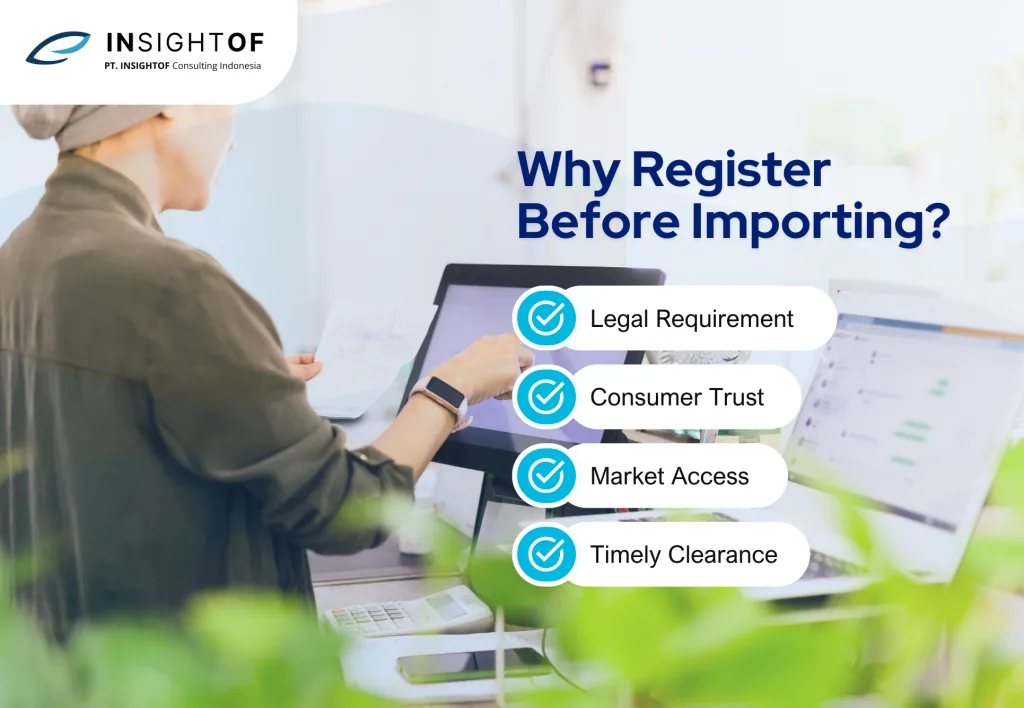
- Legal Requirement: Indonesian regulations explicitly forbid sale or import of food products without a valid BPOM permit. Customs will not release shipment without the required Surat Persetujuan Impor (SKI) and BPOM registration number. (In other words, unregistered products cannot legally enter the market.)
- Consumer Trust: A BPOM number boosts credibility. Indonesian consumers and authorities trust the BPOM logo as proof of safety and quality. Registered products compete on equal footing with domestic goods.
- Market Access: Some products (e.g. infant formula, additives, meat products) face additional scrutiny, so early registration prevents last-minute blocks. Note that BPOM now requires halal certification for imported food by October 17, 2026, so planning this in parallel is advisable.
- Timely Clearance: The BPOM registration process can be lengthy. As one exporter guide notes, companies should “allow for the finalization of the process prior to exporting goods”. Starting early avoids delays at Indonesia’s ports.
Registration Process
In practice the BPOM registration process in Jakarta follows these main steps, all done through official portals and local agencies:
1. Establish a Licensed Importer
The exporter must work with an Indonesian entity (PT company) that holds the necessary licenses. This includes an Indonesian tax number (NPWP) and trading/importer license (SIUP or API). The importer should also have a Business Identification Number (NIB) and, if applicable, an industrial business license (IUI). For alcoholic products, a special import license (IT) from the Investment Coordinating Board (BKPM) is required.
2. Register Company in e-BPOM Portal
Indonesia uses an online e-Registration system. First, the local company must create an account in BPOM’s e-Registration portal (via Single Sign-On through the Indonesia National Single Window, INSW). The portal is accessible at e-reg.pom.go.id. During account setup, the company enters its NPWP, API/SIUP, NIB, and business license information. Domestic manufacturers also provide a production site certification (PSB audit) from the regional BPOM office (e.g. BPOM Jakarta). Imported products (code ML) require at minimum the NPWP and an API/SIUP.
3. Submit Product Data Online
Once the company account is active, the importer logs into e-Registration and chooses “New Product Registration.” The portal will ask detailed questions about the food product. You must enter all formula ingredients, the manufacturing process flow, shelf-life information, and intended product claims. An Indonesian-language label design draft must be prepared (text and graphics) as part of the submission. All this information is uploaded through the portal.
4. Upload Required Documentation
Once the product data is entered in the e-BPOM portal, the following documents must be uploaded:
- Company Documents: NPWP, SIUP/API, NIB/IUI, and authorization letter from the manufacturer.
- Quality & Safety: GMP/HACCP certificates, lab test results (nutritional, microbiological, contaminants).
- Product Info: Full ingredient list, manufacturing flowchart, shelf-life data.
- Label Draft: Indonesian-language label design with nutrition facts and required claims.
- Other Supporting Docs: Application letter, product brochures (if any), and halal certificate (recommended, mandatory by 2026).
All documents must be complete, clear, and in accordance with BPOM’s requirements to avoid delays.
5. Submit and Pay Fees
After filling all data and uploading documents, submit the application online. BPOM will then issue a “Surat Perintah Bayar” (SPB) for payment of the non-tax fee. Pay the SPB as instructed and upload proof of payment in the portal.
6. BPOM Review
BPOM will review the submission. They may request additional information or clarifications through the e-Registration system. It is common for examiners to ask for more detailed lab data, modifications to the label, or clarification of ingredients. Respond promptly to any requests. Overall review typically takes 1–3 months. In practice, companies often see final approval in about 2–8 weeks after a complete submission. Officially, the NIE (distribution permit) should be issued within 30 working days of a complete application.
7. Obtain SKI (for Imports)
Once the product is registered, BPOM will link the registration to a Surat Keterangan Impor (SKI) in Indonesia’s import system. The importer can then use the SKI together with the BPOM number to clear customs. (The SKI process is done online via INSW as well.)
8. Receive NIE
When approved, BPOM issues the Nomor Izin Edar (NIE). For imported foods, this will be a number starting with “ML” (Makanan Luar/Imported Food). For domestic foods it starts with “MD”. The NIE and registration expiry date (typically 5 years) appear on the certificate. Print and keep this certificate; it must accompany the product and may be requested by authorities. The NIE allows legal distribution of the product in Jakarta and all of Indonesia.
Required Documents Checklist
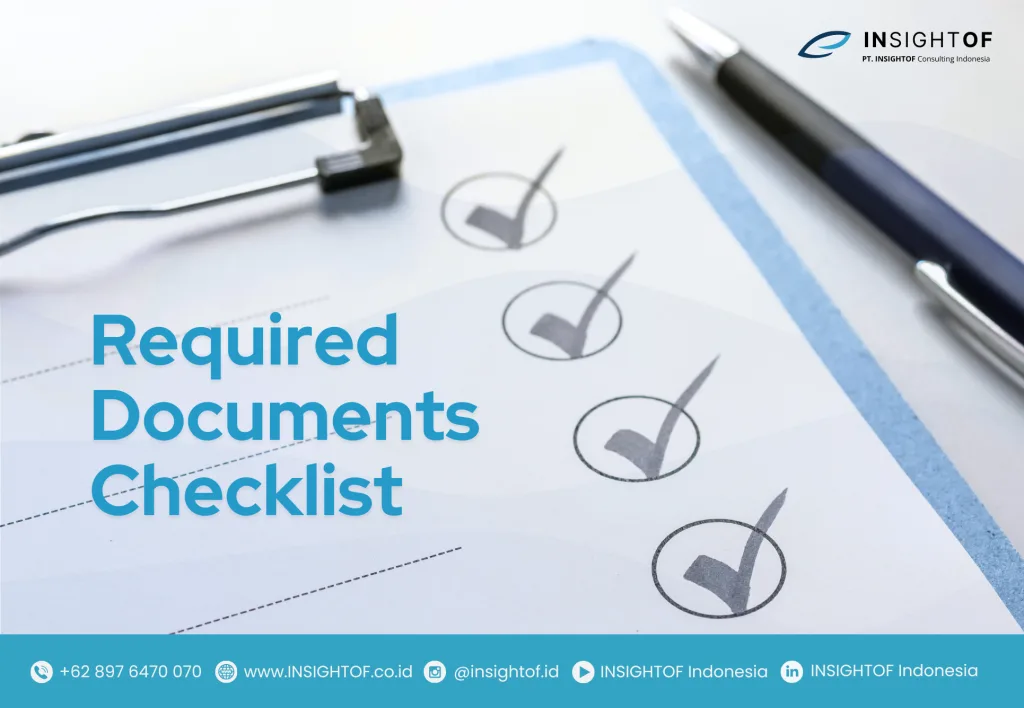
International exporters should prepare the following documents for BPOM Jakarta registration (below are typical items – specific requirements vary by product risk level):
- Importer/Company Documents: Indonesian NPWP (tax ID) and a valid Trade/Importer License (SIUP/API) for the product. If registered via OSS, provide the Business Identification Number (NIB) and associated industrial license (IUI/IUMK).
- Authorization: Letter of assignment or authorization from the foreign manufacturer empowering the Indonesian agent to register the product.
- Application Letter: Company letterhead application signed by the local company’s director, addressed to BPOM’s Food Directorate.
- GMP/Quality Certificates: Good Manufacturing Practice or HACCP certificate for the production facility (origin country). Certification of ISO-22000 or equivalent food safety management system is also acceptable.
- Trade Documents: Copy of the Indonesian company’s Articles of Association (AKTA), latest amendment, and business licenses (SIUP, IUI, IUMK, etc.), plus NPWP certificates for company and key directors.
- Technical Data: Detailed product dossier including: ingredient list (with INCI names), manufacturing process flow-chart, explanation of each ingredient’s function, shelf-life and storage conditions, batch coding scheme, and targeted risk category (low/medium/high).
- Label and Marketing Materials: Proposed product label artwork in Indonesian (showing all required claims and nutrition facts). Any product brochures or marketing materials should match the label.
- Laboratory Reports: Analytical test results from an accredited lab. For low-risk foods, provide at least a nutritional analysis (except for micro/small producers). For higher-risk items, include microbial limits and contaminant tests (heavy metals, pesticide residues, etc.). All reports should show methods and be notarized if from overseas.
- Other Permits: If applicable, halal certificate (highly recommended for all food imports), certificate of origin, phytosanitary or veterinary certificates, and any relevant export approvals from the country of origin.
(Official BPOM guidelines also mention category-specific documents, e.g. for food additives a BTP manufacturer’s license, or for infant formula additional nutritional validation. Refer to BPOM Regulation No. 27/2017 and Jakarta BPOM communications for full lists.)
Common Pitfalls & Challenges
International exporters should be aware of common hurdles in the BPOM process:
- Incomplete Documentation: Missing or incorrect information (in labels, formulas, or company data) is the leading cause of delays. For example, failing to include Indonesian translations on the label or omitting a minor ingredient can trigger rejections. Always double-check that every field in the e-form is filled and every required document is attached.
- Language Requirements: All labels, ingredient lists, and claims must be in Bahasa Indonesia. Using English-only labels is not allowed and will delay approval.
- Regulatory Classification: Misclassifying a product’s risk level or category can cause problems. Ensure you understand whether your food is “low-risk” or “high-risk” (BPOM defines categories in Regulation 27/2017). High-risk items require more extensive testing. Also verify if any additives or novel ingredients need special approvals.
- Timing and Expiry: Don’t let raw materials or formula change during review. If you alter ingredients, shelf-life, or label design after submission, you may need a new registration. Plan the final product design in advance.
- Online Portal Issues: The e-Registration and INSW single-sign-on can be confusing. Common issues include mismatched company data or delays in system verification. Having a local consultant or liaison who understands the portal is invaluable.
- Halal Overlook: With the new halal law extension (to Oct 2026), products without halal certification will eventually face barriers. Even if not yet strictly enforced, it is wise to prepare halal documentation early.
- Underestimating Lead Time: Especially for first-time registrants, expect the process to take several months. BPOM recommends submitting well before any planned shipment.
Best Practices
To ensure a smooth BPOM registration, consider these recommendations:
- Engage Local Expertise: Work with an Indonesian agent or consultant who knows BPOM requirements and speaks the language. They can help format documents correctly, navigate the e-reg portal, and communicate with BPOM officers.
- Prepare Thorough Dossier: Assemble all technical data (lab tests, formulas, etc.) in advance. Arrange for accredited labs (in the origin country or Indonesia) to test your product to BPOM specifications. Pre-check labels for compliance with Indonesian label laws (including nutritional panel format).
- Use Official Portals: Always apply through the official e-Registration portal (e-reg.pom.go.id) and pay fees via the formal SPB invoice. Avoid unauthorized “proxy” services; BPOM warns that only submissions through its system are valid.
- Monitor Progress: BPOM will communicate via the e-reg portal. Check your account regularly for messages and respond within the allowed timeframe. Document every step and save copies of all submissions.
- Plan for Renewal: Note the 5-year validity. Set calendar reminders to renew the NIE at least 3 months before expiry (BPOM allows renewal up to 90 days before expiration).
- Stay Updated: Indonesian regulations change. For example, nutrition labeling (sugar/salt/fat warnings) are evolving. Regularly check BPOM’s official announcements on its website or through industry news to anticipate new requirements.
By following these steps carefully and consulting the official BPOM guidelines, international exporters can successfully register their food products in Jakarta. Remember that official BPOM sources – such as the BPOM website (pom.go.id) and the Ministry of Trade’s publications (Indonesia.go.id) – provide detailed rules and updates. When in doubt, direct queries to a BPOM regional office (e.g. Balai POM DKI Jakarta) or an authorized consultancy to avoid costly mistakes.
Do you need assistance registering your product in Indonesia?
Contact us today to start your registration process.