Wet wipes are widely used in Indonesia for daily hygiene, baby care, and sanitation. However, manufacturers and distributors must comply with strict regulations before entering the Indonesian market.
In Indonesia, wet wipes are classified as Household Health Supplies (Perbekalan Kesehatan Rumah Tangga / PKRT) and are regulated by the Ministry of Health of the Republic of Indonesia (Kemenkes RI).
This guide explains the differences, regulatory requirements, and registration process for wet wipes in Indonesia.
About INSIGHTOF Consulting Indonesia
INSIGHTOF Consulting Indonesia is a trusted regulatory consulting firm specializing in PKRT, Medical Devices, Cosmetics, and Halal Certification. With more than 700 successful registrations, we support international manufacturers and distributors in navigating Indonesian regulations issued by Kemenkes and BPOM, ensuring a smooth and compliant market entry.
Wet Wipes Classification in Indonesia (PKRT)
Under Indonesian regulations, wet wipes are classified based on their intended use, formulation, and product claims. Determining the correct category is mandatory before registration.
1. General Wet Wipes (Tisu Basah / Baby Wipes)
General wet wipes are designed for mechanical cleaning and skin care, without antimicrobial claims.
Key Characteristics:
- Function: Cleaning dirt, refreshing skin, baby diaper changes
- PKRT Risk Class: Class I (Low Risk)
- Distribution Permit Code: PKD 101* (Personal & baby care category)
These products focus on skin safety, mild formulation, and hypoallergenic properties.
2. Antiseptic Wipes (Antiseptika)
Antiseptic wipes are products that claim to kill or inhibit germs, bacteria, or viruses.
Key Characteristics:
- Function: Sanitizing hands or surfaces to prevent disease transmission
- Ingredients: Ethanol (alcohol), Benzalkonium Chloride, antibacterial agents
- Claims: Antibacterial, disinfectant, antiviral
- PKRT Risk Class: Class II (Moderate Risk)
- Distribution Permit Code: PKD 205* (Antiseptics & disinfectants)
These products require efficacy testing to prove antimicrobial performance.
Comparison: General Wet Wipes vs. Antiseptic Wipes
| Aspect | General Wet Wipes | Antiseptic Wipes |
|---|---|---|
| Primary Purpose | Cleaning & refreshing | Killing germs & bacteria |
| Active Ingredients | Moisturizers, mild fragrance | Alcohol, antibacterial agents |
| Main Regulatory Focus | Skin safety | Antimicrobial efficacy |
| Typical Use | Baby care, face & hand cleaning | Hand & surface sanitizing |
| PKRT Risk Class | Class I (Low Risk) | Class II (Moderate Risk) |
All PKRT products must obtain a Marketing Authorization Number (Nomor Izin Edar / NIE) from Kemenkes RI before distribution.
Registration ensures:
- Consumer safety through ingredient verification
- Claim validation, especially for antibacterial claims
- Product traceability to a licensed Indonesian legal entity
Unregistered products are subject to market withdrawal, penalties, or import rejection.
Wet Wipes Registration Process via Regalkes
Wet wipes registration is conducted through the official Regalkes online system.
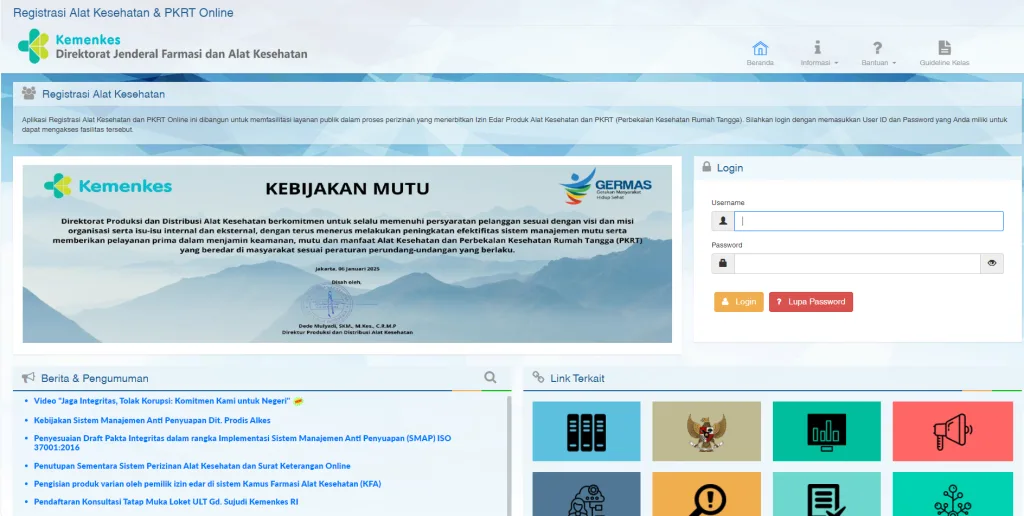
Step-by-Step Process
- Product Classification
Determine whether the product falls under PKRT Class I or Class II. - Document Preparation
- Administrative Documents:
- Business Identification Number (NIB)
- Letter of Authorization (LoA)
- Certificate of Free Sale (CFS)
- Technical Documents:
- Product formulation
- Certificate of Analysis (CoA)
- Stability test data
- Packaging & labeling design
- Efficacy Testing (Mandatory for Antiseptic Wipes):
- Laboratory test results proving germ-kill effectiveness
- Administrative Documents:
- Online Submission
Upload documents and pay the Non-Tax State Revenue (PNBP) fee. - Evaluation by Kemenkes
- Processing time: 45–90 working days, depending on product class and data completeness.
- Approval & Issuance of PKD Number
Halal Certification for Wet Wipes in Indonesia
Based on Law No. 33 of 2014 and Government Regulation No. 39 of 2021, wet wipes are subject to mandatory Halal certification.
Key Points:
- Why required?
Wet wipes may contain alcohol, fragrances, or surfactants that must be verified as Halal. - Mandatory Deadline:
October 17, 2026 for all PKRT products. - Labeling Obligation:
Products must display either:- Official Halal Logo, or
- Non-Halal Label (if prohibited ingredients are present)

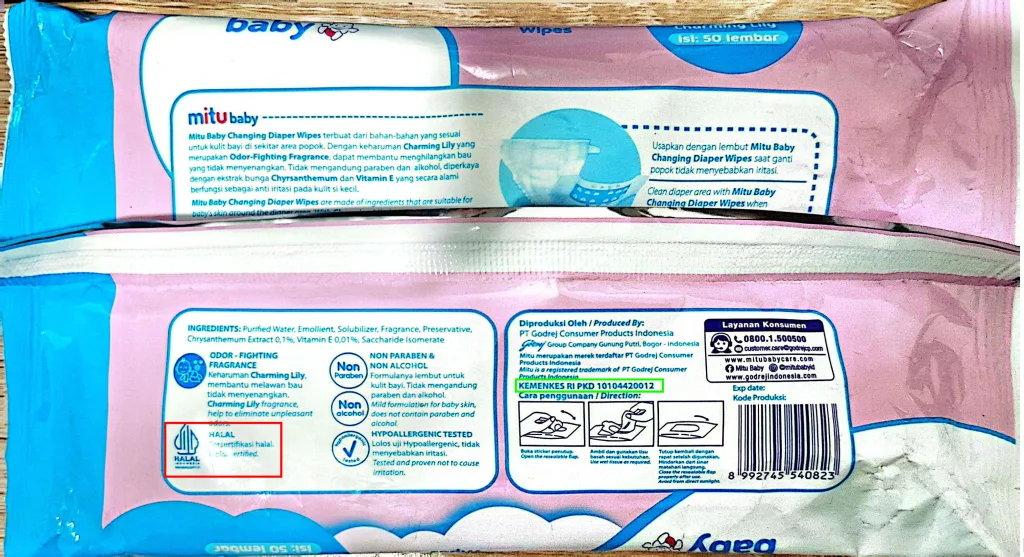
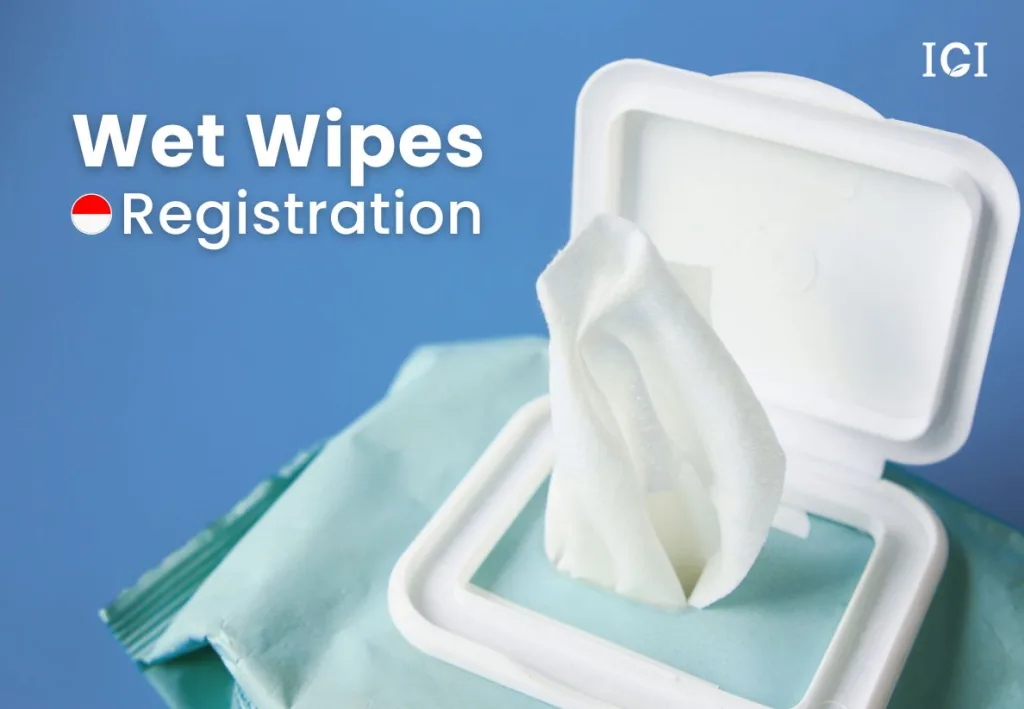
Example packaging of Wet Tissue
FAQ: Wet Wipes Registration in Indonesia
Q: Can baby wipes and antibacterial wipes share one license?
A: No. They fall under different PKRT categories and must be registered separately.
Q: Is laboratory testing required for general wet wipes?
A: Yes. A Certificate of Analysis (CoA) is mandatory to ensure product safety, even though antimicrobial efficacy testing is not required unless claims are made.
Q: Can foreign companies register wet wipes directly?
A: No. A local Indonesian company (PT) or authorized distributor must hold the registration.
How INSIGHTOF Consulting Indonesia Supports Your Registration
INSIGHTOF provides end-to-end regulatory support for wet wipes registration in Indonesia:
✔ Household Health (PKRT) Registration
✔ Regalkes Submission & Monitoring
✔ Halal Certification Assistance (BPJPH)
Conclusion
Successful wet wipes registration in Indonesia starts with one critical decision:
Is your product for cleaning or killing germs?
This classification determines your PKRT risk class, testing requirements, and registration pathway. Additionally, Halal certification will become mandatory by October 17, 2026.
Early compliance minimizes regulatory risks and ensures uninterrupted access to the Indonesian market.
Ready to Register Your Wet Wipes in Indonesia?
Contact INSIGHTOF Consulting Indonesia for a regulatory assessment and professional guidance.