In 2025, the regulatory landscape for processed food in Indonesia is no longer simply about holding a “Marketing Authorisation” (MD/ML). The industry now faces strict demands for nutritional transparency, a war on misleading health claims, and a regulator that stands as a peer to global food authorities. For local manufacturers and importers alike, compliance has shifted from a bureaucratic checklist into the primary shield for brand reputation.
Drawing on years of regulatory practice and hundreds of food product registrations since 2016, INSIGHTOF Consulting Indonesia highlights ten key developments defining BPOM’s oversight of the food and beverage sector in 2025.
Nutri-Level Implementation
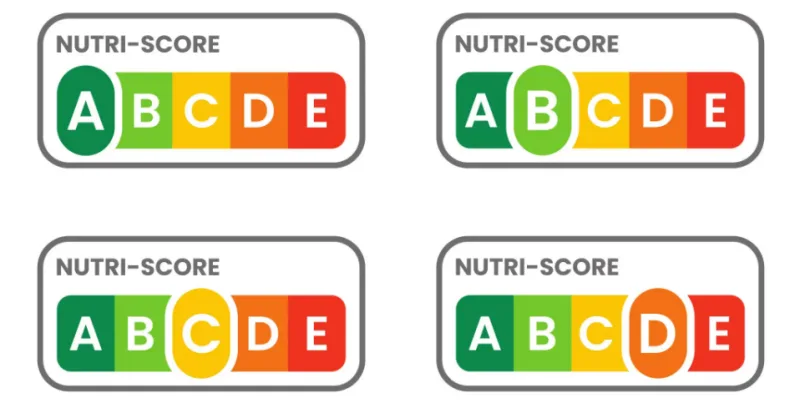
One of the most significant regulatory milestones of 2025 is the full enforcement of new Front-of-Pack Nutrition Labelling (Nutri-Level) rules. Building on revised labelling regulations, BPOM now mandates the inclusion of prominent nutritional rating logos on packaging for ready-to-consume products.
The primary focus is the control of Sugar, Salt, and Fat (GGL). Products with “hidden sugars” that previously passed with standard labelling must now display clear visual indicators. Terms like “Low Sugar” or “Healthy” can no longer be used loosely; they require laboratory validation against stricter new thresholds.
Rp42 Billion in Illegal and Non-Compliant Food Seized Ahead of Year-End 2025
BPOM’s Intensified Food Surveillance for Christmas 2025 and New Year 2026 (Inwas Nataru) uncovered more than Rp42 billion worth of illegal, expired, and damaged food products nationwide. Inspections covered 1,612 distribution facilities across 38 provinces, including retail outlets, distributors, importers, and e-commerce warehouses.
Despite fewer facilities inspected compared to 2024, the non-compliance rate increased sharply to 34.9%, signaling deeper structural issues rather than isolated violations.

Photo Sources: Biro Kerja Sama dan Hubungan Masyarakat BPOM
Online Food Sales Are No Longer a Regulatory Blind Spot
Digital enforcement reached unprecedented scale in 2025. BPOM’s cyber patrols identified over 2,600 problematic online sales links, with 60–77% selling products without distribution permits and the remainder containing hazardous ingredients.
The economic value of online violations alone exceeded Rp40 billion, dwarfing offline findings.
Strategic takeaway: Marketplace presence equals regulatory presence. Compliance failures online now carry the same consequences as physical distribution.
Ramadan and Idulfitri Surveillance Reveals Persistent Structural Violations
During Ramadan and Idulfitri 2025, BPOM found 376 food distribution facilities selling illegal, expired, or damaged products, totaling 35,534 non-compliant items Artikel Pangan BPOM
The most common violations:
- Products without marketing authorization (TIE)
- Expired packaged foods
- Improper storage leading to product degradation
Eastern Indonesia recorded disproportionately high findings, highlighting logistics and cold-chain vulnerabilities.
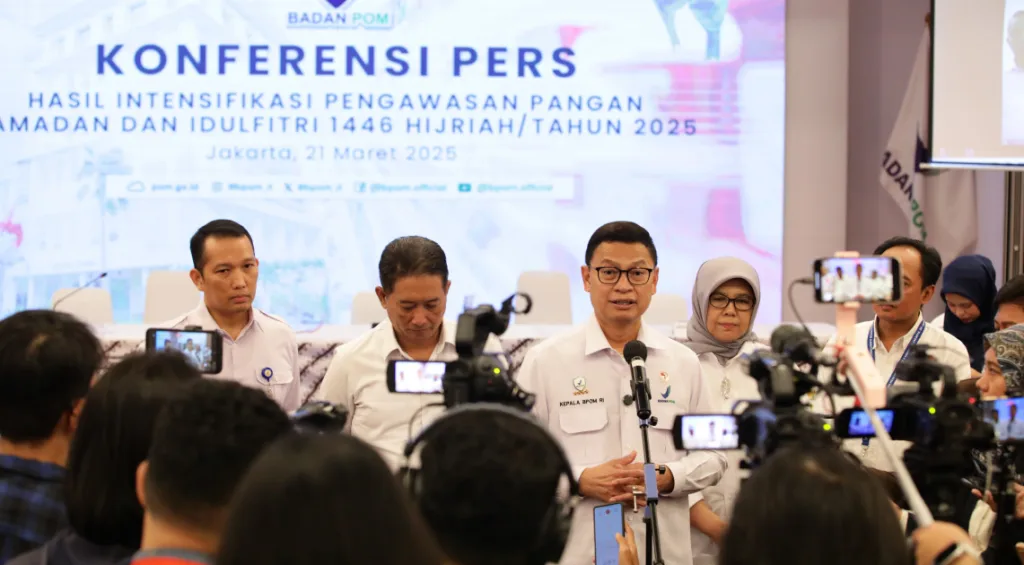
Photo Sources: Biro Kerja Sama dan Hubungan Masyarakat BPOM
Products Labeled Halal Found Containing Porcine DNA
SIARAN PERS Nomor 242/KB.HALAL/HM.1/04/2025 Date: 21 April 2025
In one of the most significant breaches of consumer trust in 2025, a joint enforcement action between BPOM and the Halal Product Assurance Agency (BPJPH) uncovered a major “Halal integrity crisis.” Utilizing advanced laboratory testing for DNA and specific porcine peptides, authorities identified 11 batches across 9 different processed food products that contained traces of pig-derived elements.
The gravity of this finding lies in the fact that 7 of these products had already secured official Halal certification. This discovery triggered immediate regulatory action based on Government Regulation (PP) No. 42 of 2024 and the inter-agency agreement signed earlier in the year. For the certified products, BPJPH moved swiftly to revoke status and order a total market withdrawal. For the uncertified products, BPOM issued severe administrative sanctions and mandatory recalls, citing a failure to provide truthful data during the product registration process.
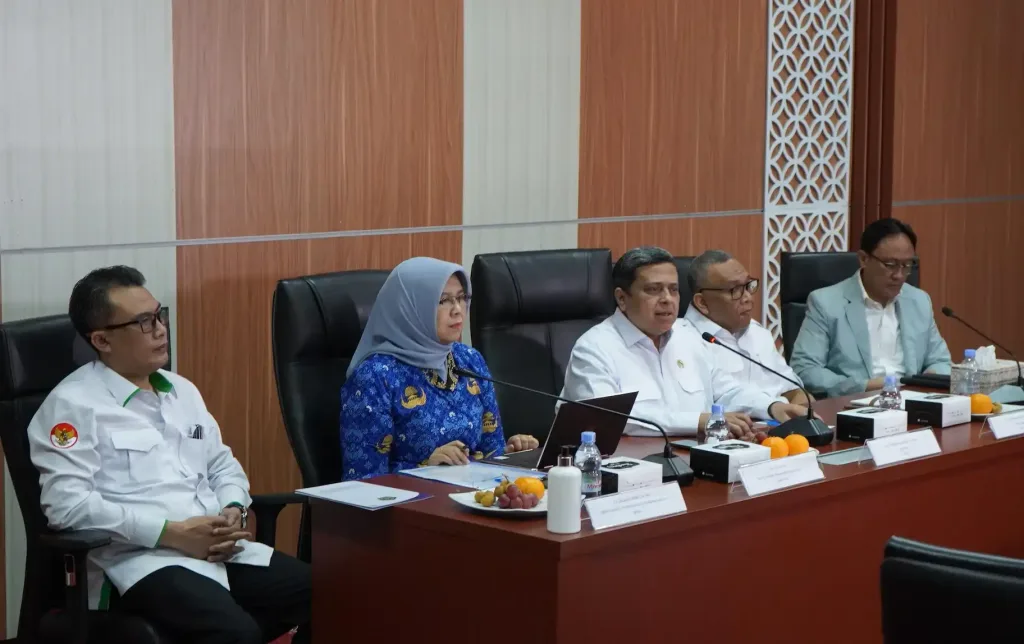
Photo Sources: BPJPH
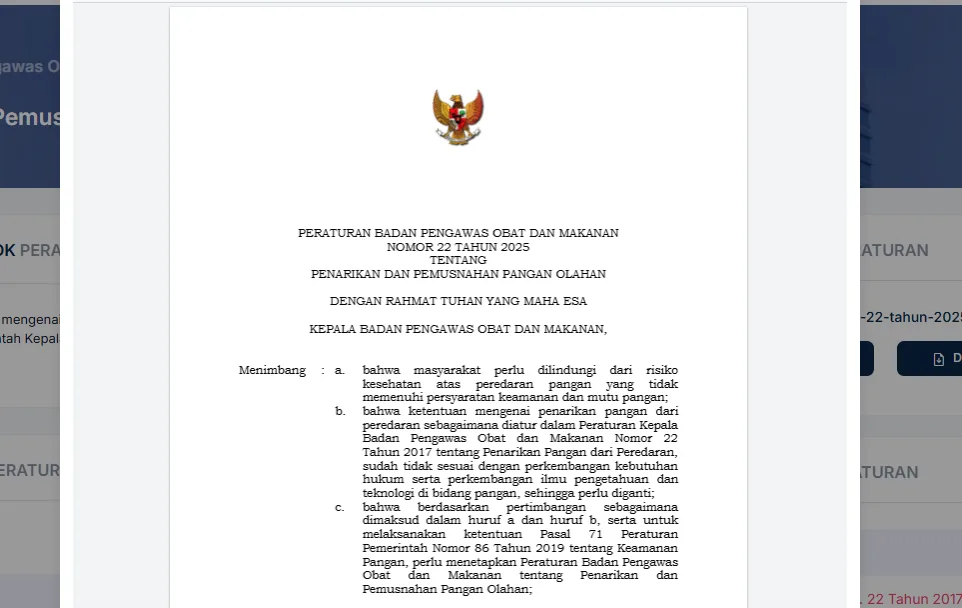
Formal Recall and Destruction Rules Introduced Under BPOM Regulation No. 22 of 2025
The regulatory safety net tightened significantly in 2025 with the enactment of BPOM Regulation No. 22 of 2025. This comprehensive framework replaces aging guidelines and establishes a rigorous protocol for removing non-compliant products from the Indonesian market. For the first time, BPOM has unified the standards for Mandatory Recalls (enforced by the regulator), Voluntary Recalls (initiated by the brand owner), and the formal Product Destruction Procedures that must follow.
The regulation mandates that any food product failing to meet safety, quality, or administrative requirements must be withdrawn through a structured process. This includes clear enforcement timelines based on the level of risk to public health. The rule ensures that once a product is identified as hazardous or non-compliant, it is not only removed from shelves but its final destruction is documented and witnessed to prevent illegal re-entry into the supply chain.
The “Reviewer Effect”: Food Influencers Become De Facto Market Watchdogs
In 2025, a new era of decentralized market surveillance emerged as independent content creators and “food science” influencers became a disruptive force in the industry. Armed with portable testing kits and partnerships with private laboratories, these influencers began conducting independent audits on viral FnB products—specifically targeting sugar levels, calorie counts, and hidden additives.
The impact was immediate and severe. When independent test results contradicted the nutritional facts listed on a label, the resulting “viral” reputational damage occurred within hours, spreading across social media platforms long before formal BPOM investigations could be finalized. This phenomenon has effectively turned the public into a secondary tier of enforcement. While BPOM remains the official authority, these digital watchdogs have significantly raised the stakes for transparency. Brands found to be “greenwashing” or under-reporting sugar content to achieve a better “Nutri-Level” grade found themselves facing public boycotts and PR crises that were often harder to manage than the subsequent regulatory fines.

Tightened Rules on the Use of the Term “Milk” in Food Products
In 2025, BPOM addressed the growing confusion in the plant-based beverage market by issuing Circular Letter No. 7 of 2025. This directive strictly limits the use of the term “milk” (susu) to products derived exclusively from animal lactation. The regulation aims to ensure that consumers are not misled regarding the nutritional profile of beverages—specifically protein and calcium content—which often varies significantly between dairy and plant-based alternatives.
While the regulation provides narrow exceptions for traditionally recognized terms like “soy milk” (susu kedelai) and “coconut milk” (santan/susu kelapa), most modern plant-based beverages must now adopt alternative nomenclature. Terms such as “almond drink,” “oat extract,” or “cashew beverage” are becoming the mandatory standard. This shift aligns Indonesia with international Codex Alimentarius standards and similar strict labeling laws in the European Union.

High-pH Drinking Water Now Requires Mandatory SNI Certification
PENGUMUMAN NOMOR: RG.03.01.52.04.25.05 TENTANG REGISTRASI AIR MINUM pH TINGGI
In a major shift for the functional beverage sector, BPOM has officially reclassified high-pH (alkaline) drinking water as a medium-high risk category. This change marks the end of the era where alkaline water could be registered under simplified food safety protocols. Under the new 2025 guidelines, all high-pH drinking water products must now secure mandatory SNI (Standar Nasional Indonesia) certification as a prerequisite for BPOM marketing authorization.
This regulatory tightening ensures that products claiming specialized health benefits through pH levels meet rigorous, standardized quality controls throughout the production process. BPOM has made it clear that any products currently on the market without valid SNI documentation face immediate registration rejection or the revocation of existing distribution permits (NIE). The move is designed to protect consumers from unsubstantiated health claims and ensure that “functional” water meets the same safety benchmarks as traditional bottled water, with added scrutiny on mineral stability and electrolysis processes.

Specialized Product Categories Trigger Heightened Technical Scrutiny
In 2025, BPOM issued detailed technical guidance for emerging and high-risk categories, including:
- Latiao and ready-to-consume starch products
- Low-acid hermetically sealed foods
- Imported products flagged by foreign regulators (e.g., SFA Singapore alerts)
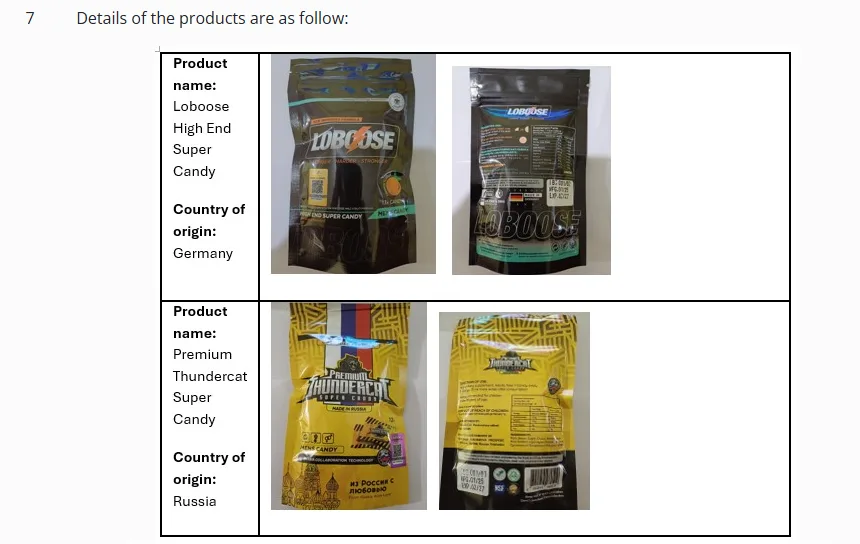
Photo Sources: Singapore Food Agency (SFA)
The era of “fitting” a product into the easiest registration category is over. Under BPOM’s 2025 technical overhaul, product classification has become a frontline compliance risk, not a procedural formality. Businesses must now conduct a rigorous pre-registration regulatory audit to ensure their product category, formulation, claims, and labelling align precisely with the latest technical and risk-based guidelines.
For importers and multinational brand owners, maintaining a “Global Compliance Radar” is no longer optional. A recall, enforcement action, or safety alert in another jurisdiction can rapidly trigger scrutiny in Indonesia. Proactive engagement with BPOM—before their cyber patrols or cross-border intelligence mechanisms detect an issue—has become a critical risk-mitigation strategy.
In 2025, compliance is no longer reactive. It is anticipatory, data-driven, and continuous.
INSIGHTOF Consulting Indonesia helps businesses move from regulatory approval to regulatory resilience.
About INSIGHTOF Consulting Indonesia
Our expertise includes:
- Product Registration: Domestic (MD) and Foreign (ML) Food Marketing Authorisation.
- Facility Certification: SMKPO
- Halal Compliance: Support for Halal Certification (Mandatory for Food/Beverages as of October 2026).
With deep knowledge of the 2025 regulatory dynamics, we help clients navigate the complexities of compliance—from raw material formulation to post-market marketing strategies.
Conclusion
The year 2025 marks the transformation of “Food Safety” into “Measured and Transparent Integrity.” BPOM is moving aggressively, backed by digital data and global standards.
Brands that underestimate nutritional transparency or raw material integrity will fall behind. INSIGHTOF Consulting Indonesia stands ready to be your strategic partner, ensuring your food products are not only legal but also trusted by increasingly critical Indonesian consumers.