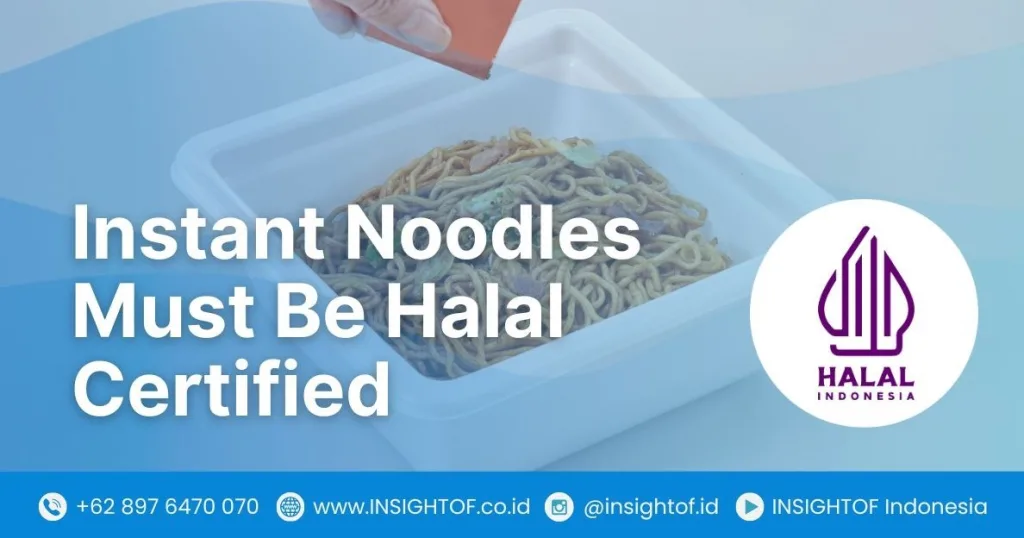
Instant noodles, a staple food for millions of Indonesians, must not only be safe but also halal-certified. For businesses, understanding this regulation is the key to staying in the market and avoiding legal sanctions. The deadline has been set: October 17, 2026 is the final date for imported food and beverages—including instant noodles—to obtain halal certification.
1. Instant Noodle Registration in Indonesia
In Indonesia, instant noodles fall under the category of Processed Food or Pangan Olahan. Before being marketed, every processed food product must obtain a Distribution Permit (Izin Edar) issued by the Indonesian National Agency of Drug and Food Control (BPOM).
See our Comprehensive Guide on Importing Instant Noodles into Indonesia
- Purpose of BPOM Permit: To ensure that products are safe, high-quality, and not harmful to consumers (thayyib). BPOM evaluates ingredients, production processes, and quality standards.
For noodles, they typically fall under the following Kategori Pangan (Food Category):
- No Kategori Pangan: 06.4.3
- Kategori Pangan: Pasta dan Mi Pra-Masak Serta Produk Sejenis (Pre-cooked Pasta and Noodles and Similar Products)
- Definisi (Definition): Mi kering (dried noodles) are dried noodle products obtained from wheat flour with or without the addition of other ingredients and have undergone drying or frying. Wheat dried noodle products contain not less than 60% wheat ingredients.
- Karakteristik Dasar (Basic Characteristics):
- Kadar air (Moisture content) not more than 11%;
- Kadar protein (Protein content) not less than 6%
👉 However, the exact categorization and requirements may vary depending on the specific ingredients, formulation, and processing method of each product. For example, noodles made from rice, mixed grains, or fortified with special additives may be registered under a different sub-category.
Imported packaged foods are issued a “BPOM RI ML” number (ML = Makanan Luar/Foreign Food). The registration process is managed via BPOM’s online portal (e-reg.pom.go.id).
⚠️ Important: A BPOM permit does not automatically mean the product is halal. It only guarantees safety (thayyib), while halal certification ensures compliance with Islamic law. Both are separate legal gateways that must be fulfilled.
2. Why Are Instant Noodles Required to Be Halal in Indonesia?
The obligation is based on Law No. 33/2014 on Halal Product Assurance (JPH), further regulated under Government Regulation No. 42/2024.
In short, all products entering, circulating, and being traded in Indonesia must be halal-certified, except those made from explicitly haram ingredients. Instant noodles fall under the priority category of food and beverages.
This obligation reflects the needs of Indonesia’s Muslim-majority population, for whom halal assurance is part of consumer protection and religious observance.
 Why Instant Noodles Are Considered Syubhat
Halal certification classifies ingredients into:
- Halal: Clearly permissible (plants, seafood, minerals, pure chemicals).
- Haram: Clearly forbidden (pork, alcohol, carrion).
- Syubhat (Doubtful): Questionable due to technology, complex materials, or processing methods.
Instant noodles fall into the Syubhat category because:
- They contain Food Additives (emulsifiers, flavors, stabilizers).
- The production process carries contamination risks.
Therefore, Syubhat products must undergo halal certification to obtain an official halal fatwa.
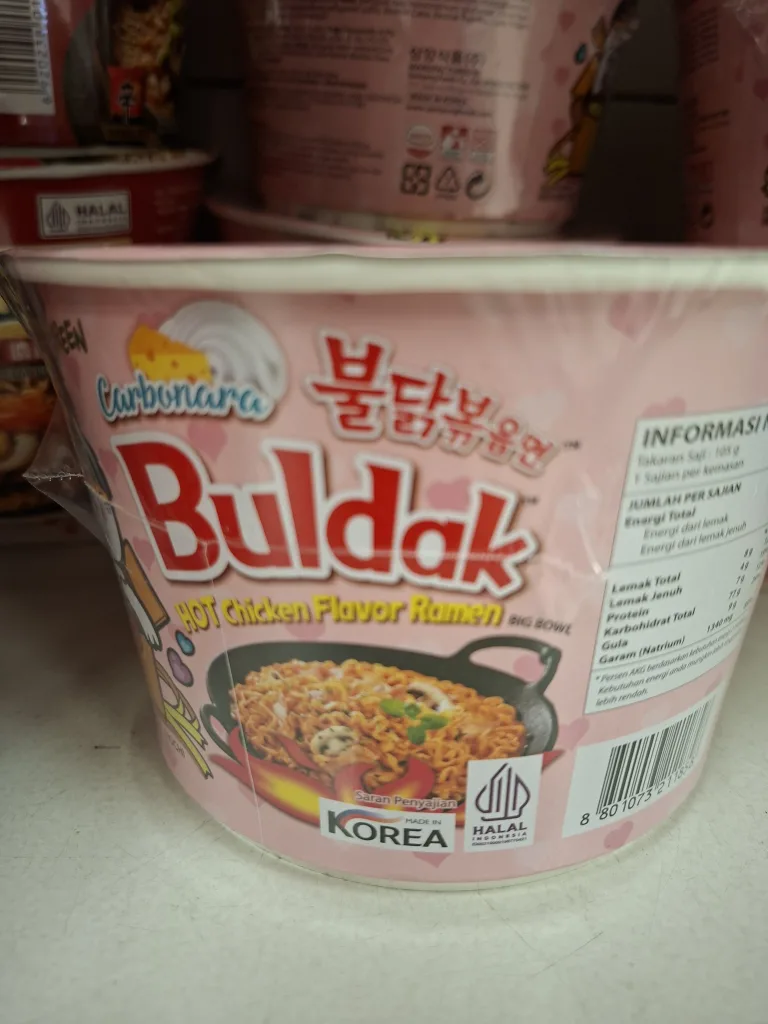
In fact, many instant noodle brands in Indonesian supermarkets already display the official halal logo from BPJPH/MUI on their packaging. Below are some examples from different brands we found in retail stores.
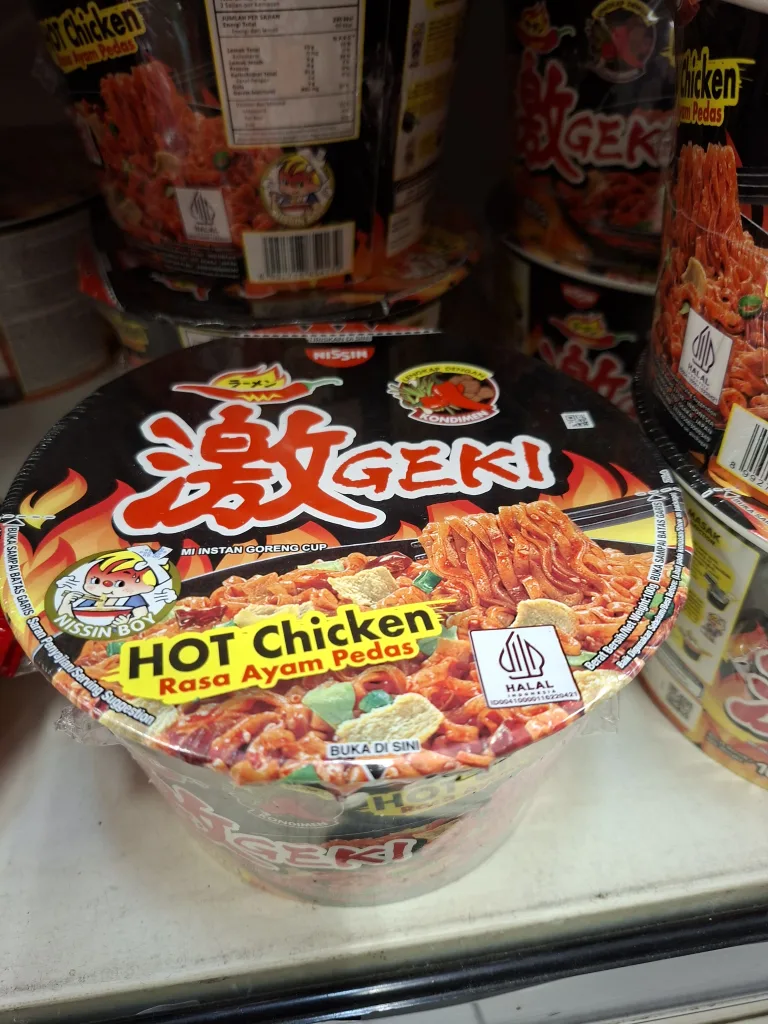
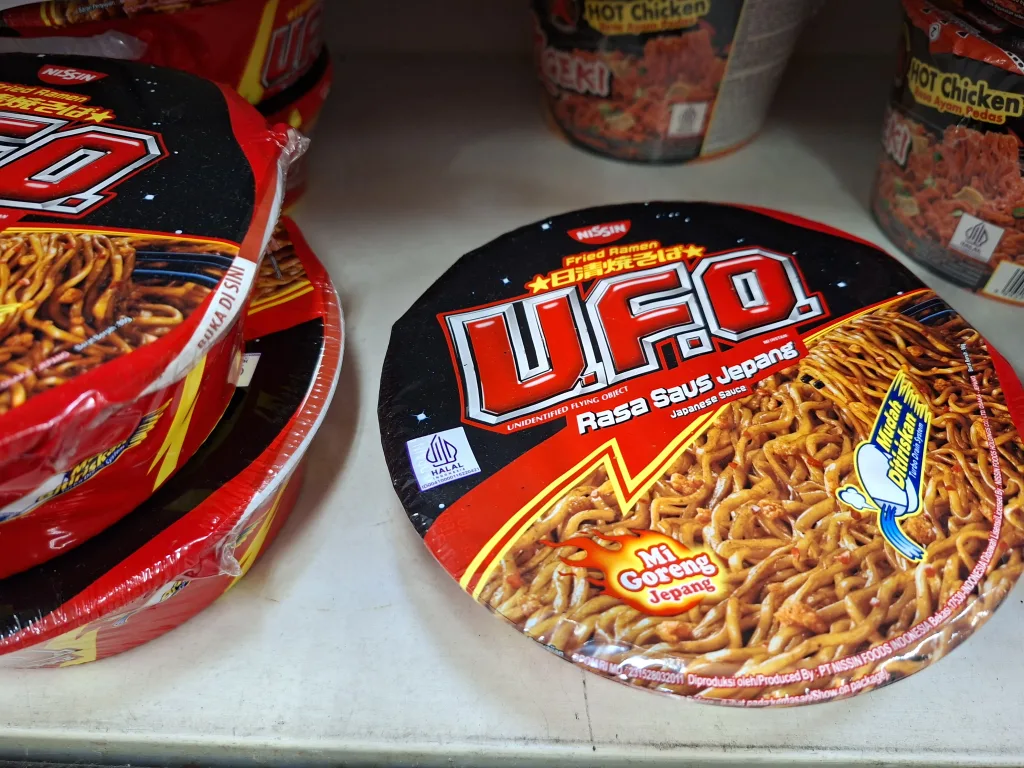
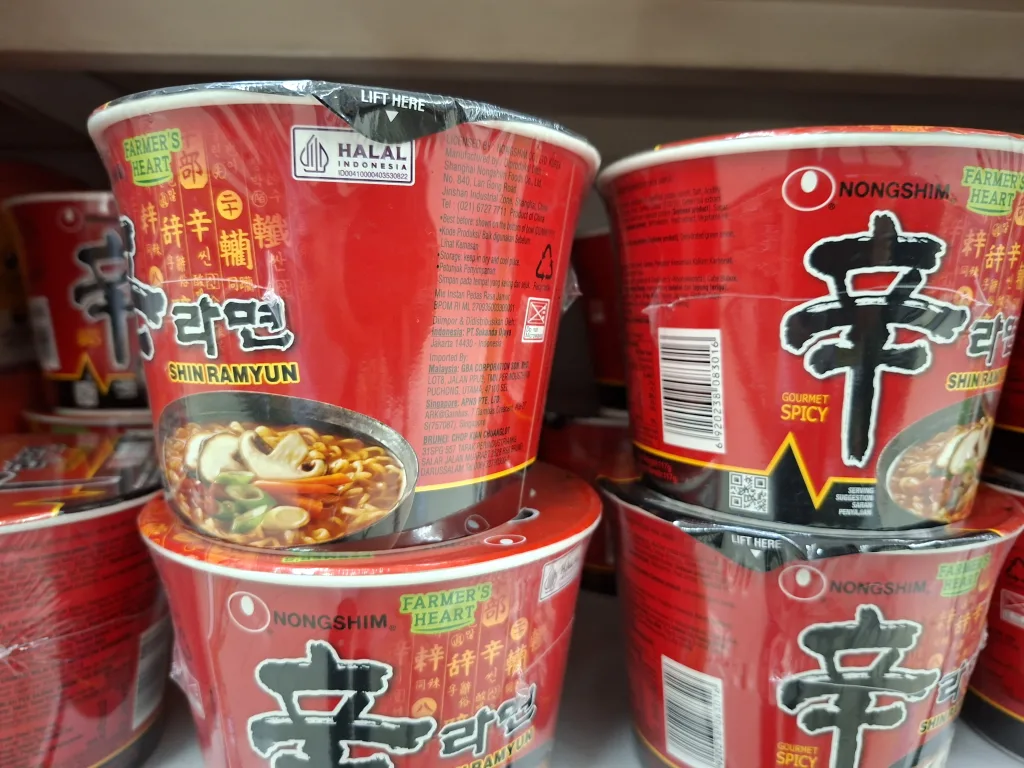
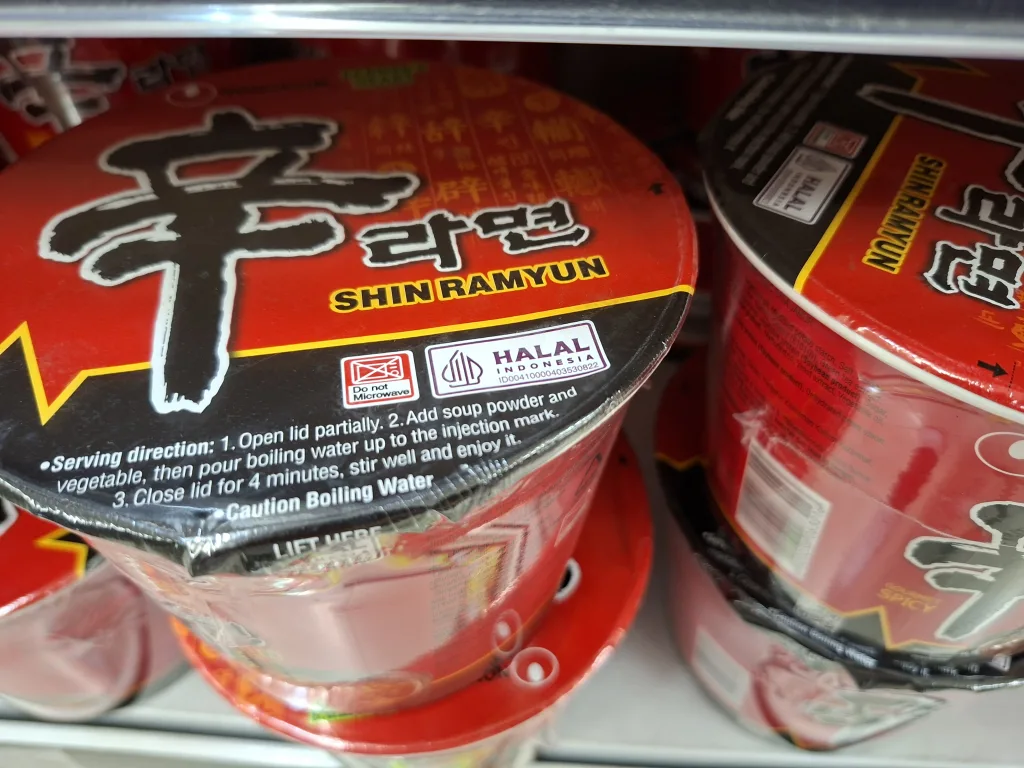
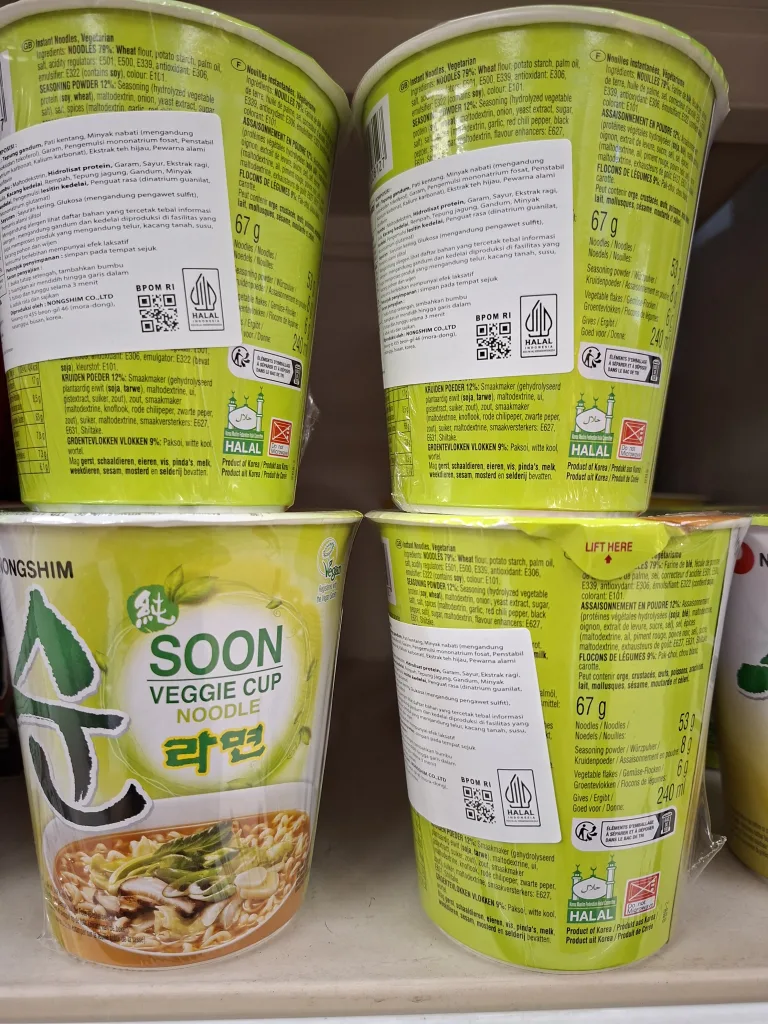
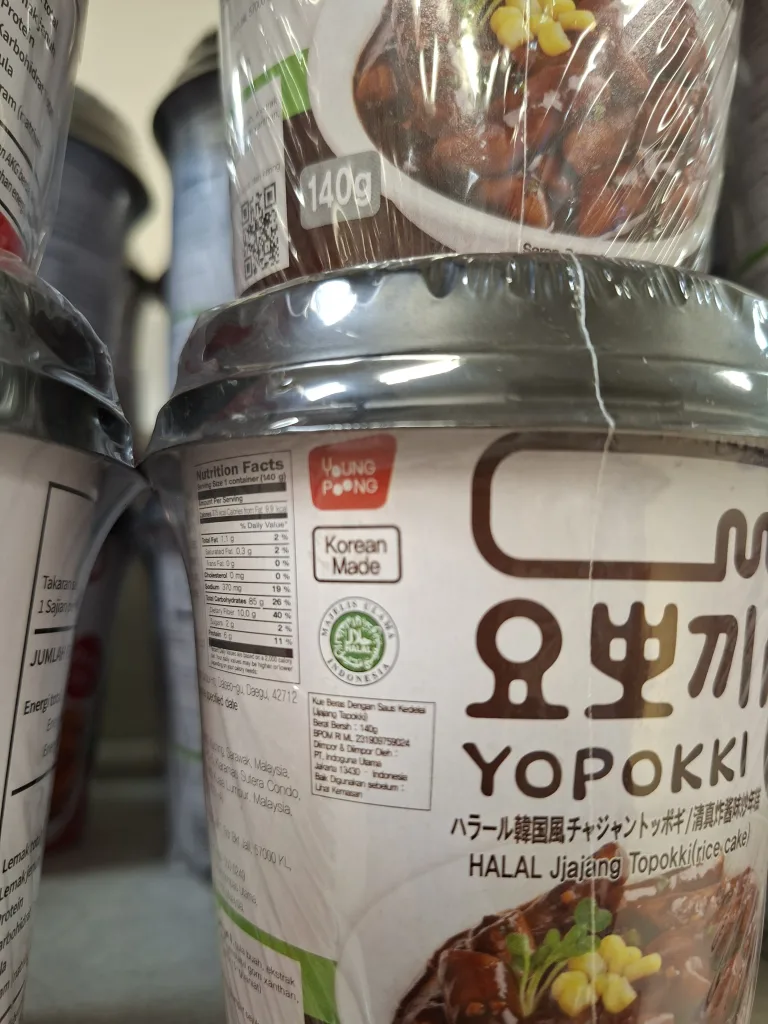
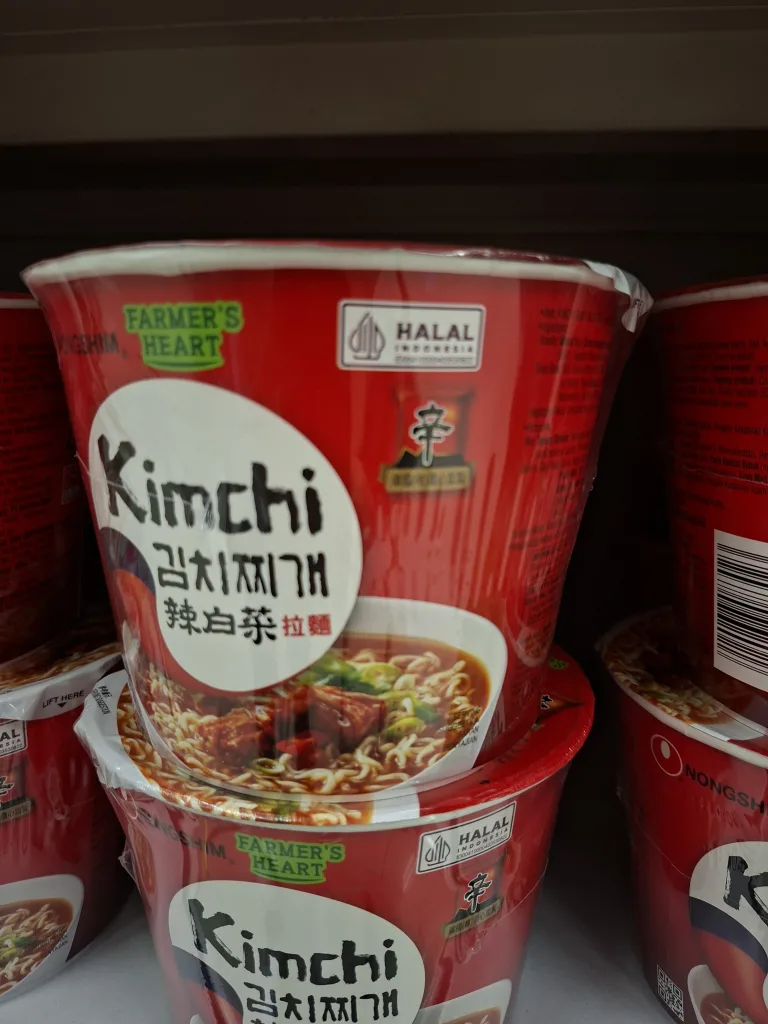
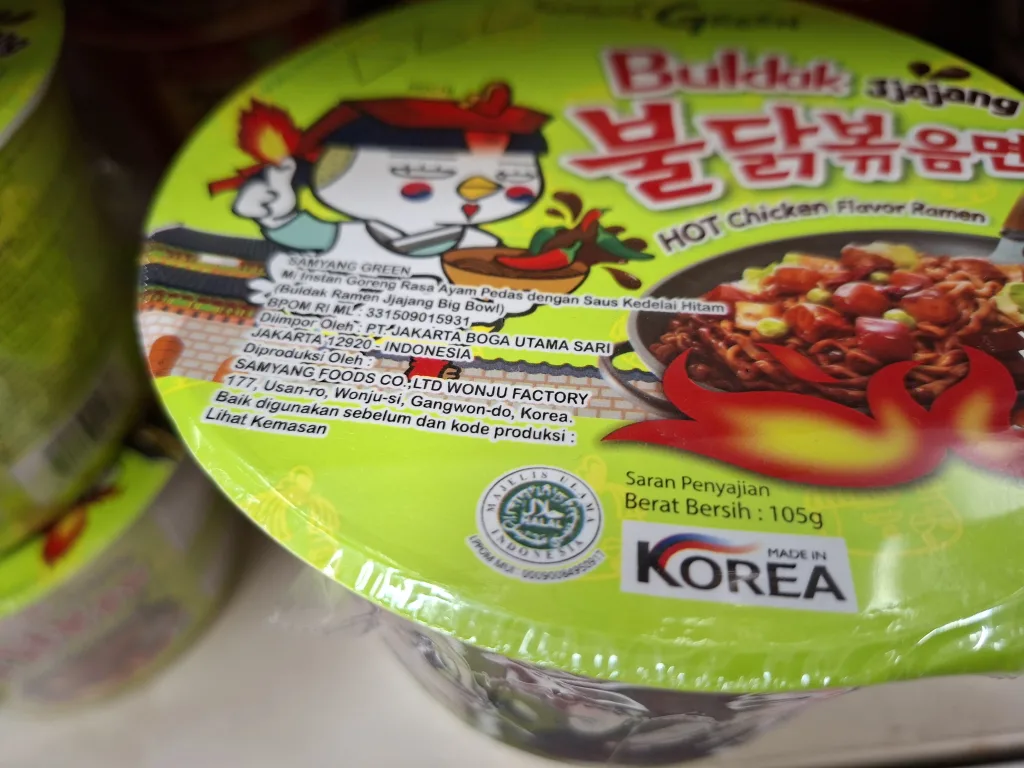
Transition from the Old MUI Halal Logo to the New BPJPH Logo
For many years, halal certification in Indonesia was managed by the Majelis Ulama Indonesia (MUI), and products displayed the green circular logo with Arabic script.
However, since the implementation of Law No. 33 of 2014 on Halal Product Assurance (UU JPH), responsibility for halal certification has shifted to the Halal Product Assurance Organizing Agency (BPJPH) under the Ministry of Religious Affairs.
In line with this transition, a new halal logo was introduced in 2022:
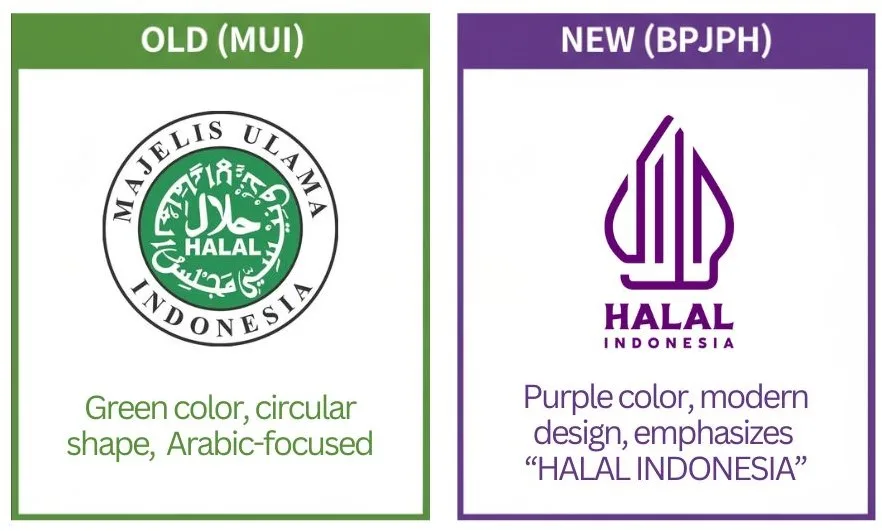
⚠️ Important: Both logos remain valid during the transition period. That is why in supermarkets today, you may still find instant noodles with the old MUI halal logo alongside others already using the new BPJPH halal logo.
This dual usage is temporary and will gradually shift entirely to the new BPJPH logo as more companies renew or apply for certification under the updated system.
3. Non-Halal Ingredients in Instant Noodles (Pork Derivatives)
A halal product must always follow a clear formula:
Halal Materials + Clean Facilities & Processes = Halal Product
For instant noodles, one of the biggest risks to halal compliance lies in the use of pork derivatives. These substances may be present in ways that are not immediately obvious to consumers.
In the context of instant noodles, pork-derived ingredients raise serious halal concerns because they can appear in both the noodles and the accompanying flavor sachets. According to Al-Fatih & Esfandiari (2020), even small traces of non-halal animal products in the production chain can compromise the overall halal status of the final product.
How Pork Derivatives Can Enter Instant Noodles:
- Flavor Enhancers & Seasoning Powders: Flavoring sachets often contain animal-based extracts (e.g., meat broth, stock, or hydrolyzed proteins). If these extracts come from pork or from animals not slaughtered according to Islamic law, the product becomes non-halal (Usman et al., 2021).
- Fats and Oils: Some seasoning mixes use animal fat as a flavor base. If pork fat or lard is used, even in small amounts, it contaminates the halal status.
- Additives & Emulsifiers: Certain additives, like gelatin, glycerin, or enzymes, may be sourced from pork by-products unless explicitly certified halal.
- Cross-Contamination: Facilities that process pork products alongside halal-certified items risk contamination at multiple stages—mixing, drying, packaging, or storage.
This issue is especially critical in Southeast Asian markets, where product labeling and ingredient sourcing transparency can vary greatly (Al-Fatih & Esfandiari, 2020). Some brands may not fully disclose the origin of meat extracts, leading to uncertainty for Muslim consumers.
 Why Halal Audits Are Important:
To ensure halal compliance, every single ingredient in the noodle and seasoning must be traced to its source. This includes verifying:
- The origin of animal extracts or additives
- Whether animals were slaughtered according to halal procedures
- That facilities are free from pork contamination
This is why halal audits review the entire Halal Product Assurance System (SJPH)—from raw material selection, supplier verification, processing facilities, packaging, and even the distribution chain. Only when every link in the production process is halal-certified can instant noodles be guaranteed as safe for Muslim consumers.
4. Sanctions for Non-Compliance After October 17, 2026
If products remain uncertified beyond the deadline, businesses face administrative sanctions, including:
- Written warnings
- Administrative fines
- Product withdrawal from the market
Special Note: If a written warning is issued, businesses must withdraw the product until the label “not halal” is added to the packaging. BPJPH will also publicly announce products subject to sanctions.
5. Don’t Delay: Start Your Certification Process Now!
With the deadline only one year away, businesses must act immediately. The halal certification process—especially for complex products like instant noodles—takes longer than BPOM registration, as it involves audits by LPH and halal rulings by MUI.
✅ Best advice: Apply for halal certification in parallel with your BPOM permit to complete both legal requirements on time.
Ready to Secure Your Instant Noodle Business?
Don’t let regulations stop your business. INSIGHTOF is here to help!
We provide professional consulting and assistance for every stage: from document preparation and SJPH implementation to submission with BPJPH/LPH.
👉 Contact INSIGHTOF today to ensure your instant noodles are not only delicious but also legal and halal.
Do you need assistance registering your product in Indonesia?
Contact us today to start your registration process.


.svg/240px-YouTube_social_red_squircle_(2017).svg.png)