Household Health Products, known as PKRT (Perbekalan Kesehatan Rumah Tangga), are essential for maintaining hygiene, safety, and comfort in daily life. These include familiar items such as cleaning agents, disinfectants, tissues, cotton, air fresheners, and household pesticides.
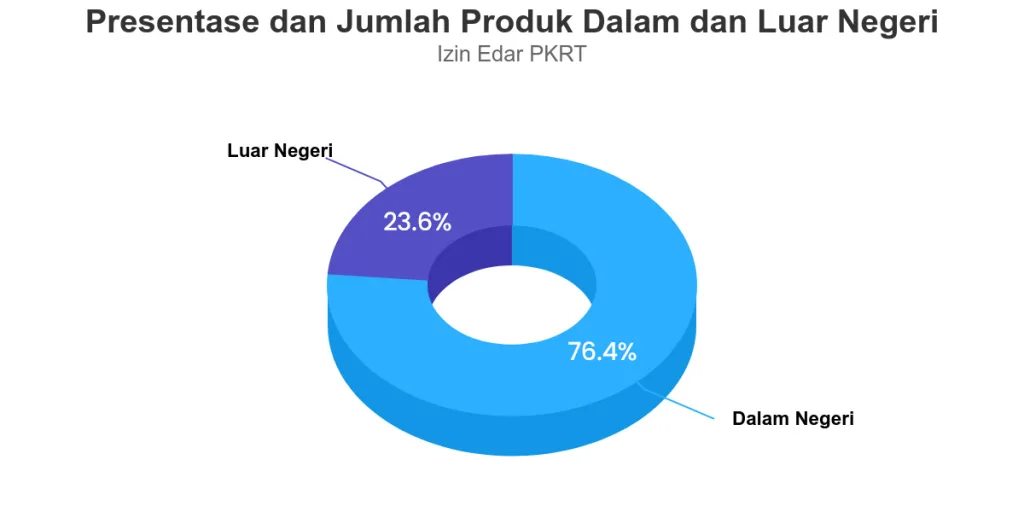
Based on the latest data on PKRT marketing authorizations, approximately 76.4% of approved household products are locally produced, while 23.6% are imported. This shows Indonesia’s strong domestic production capacity and growing innovation in the household health sector.
🏷️Marketing Authorization Number Format
Every registered PKRT product must display its official marketing authorization number, as issued by the Ministry of Health (Kemenkes RI). The format is as follows:
- Local Household Health Products:
KEMENKES RI PKD XXXXXXXXXXX - Imported Household Health Products:
KEMENKES RI PKL XXXXXXXXXXX
This number ensures that the product has undergone evaluation for safety, efficacy, and quality, and is legally allowed to circulate in the Indonesian market.
🏷️PKRT Categories and Sub-Categories
PKRT products are grouped into several categories, including:
| No. | Category | Description | Sub-Categories |
|---|---|---|---|
| 1 | Tissue and Cotton Products | Products intended for hygiene and personal care, both for household and healthcare use. | • Beauty cotton – used for cosmetic purposes (cleansing, makeup removal). • Facial tissue – soft disposable tissue for facial use. • Toilet tissue – tissue paper for sanitation purposes. • Refreshing tissue – wet wipes for skin cleaning. • Paper towel – absorbent paper for drying hands or cleaning surfaces. • Other tissue and cotton products – such as cotton balls, cotton rolls, and multipurpose tissues. |
| 2 | Washing Preparations | Products designed for cleaning various materials and surfaces, including fabrics and skin. | • Laundry soap – general-purpose cleaning soap. • Detergent – washing products for clothes or fabrics. • Fabric softener – products to make clothing soft and fragrant. • Bleaching agent – products used to whiten fabrics. • Enzymatic detergent – products with enzymes for stain removal. • Other washing preparations – including hand wash soap and antiseptic soap. |
| 3 | Cleaners | Products formulated to clean a wide range of surfaces and household equipment. | • Kitchenware cleaner – dishwashing liquids or degreasers. • Glass cleaner – for mirrors and windows. • Floor cleaner – for tile or hard floors. • Porcelain/toilet cleaner – for toilets and porcelain surfaces. • Furniture cleaner – polish and surface agents. • Carpet cleaner – for carpets and upholstery. • Other cleaners – such as water purifiers, car cleaners, and shoe cleaners. |
| 4 | Baby Care Equipment | Products used for infant hygiene and daily care. | • Feeding bottles and similar items. • Baby diapers. • Other baby care tools – such as baby wipes and grooming accessories. |
| 5 | Antiseptics and Disinfectants | Products used to reduce or eliminate microorganisms on skin or surfaces. | • Antiseptics – applied to the skin to reduce microorganisms. • Disinfectants – used on non-living surfaces. • Other antiseptic and disinfectant products – multipurpose or combined formulations. |
| 6 | Fragrances | Products designed to give a pleasant scent or eliminate unpleasant odors. | • Room fragrance – air fresheners for indoor spaces. • Telephone fragrance – fragrance pads or accessories for devices. • Car fragrance – car air fresheners. • Refrigerator deodorizer – odor neutralizers for refrigerators. • Insect-repelling fragrance. • Other fragrances – other types of household air fresheners. |
| 7 | Household Pesticides | Products designed to control or repel pests in domestic environments. | • Insect control products – insecticides to eliminate insects. • Insect repellents – prevent insect approach or bites. • Head lice control products. • Pet pest control products – for pets or small livestock. • Rodent control products. • Other household pesticides – other pest control products for household use. |
| 8 | Eating Utensils | Tools used for preparing, serving, or consuming food. | • Metal eating utensils – spoons, forks, knives, etc. • Non-metal eating utensils – made of plastic, bamboo, ceramic, or other materials. |
🏷️Labeling Requirements for PKRT
To prevent consumer confusion and ensure safety, PKRT labeling must include clear and accurate information. Key requirements include:
- Product type and variant.
- Name and concentration of active ingredients.
- Expiration date (if applicable).
- Warning signs or side effects (except for PKRT class I).
Additionally, labeling must not contain misleading claims such as “100% safe,” “kills all germs,” “anti-virus,” “magic,” or “recommended by doctors.”
Images of children under 5 years old cannot be shown unless the product is intended for that age group, and pictures of fruits or flowers may only appear as illustrations of scent (e.g., “lavender fragrance”).
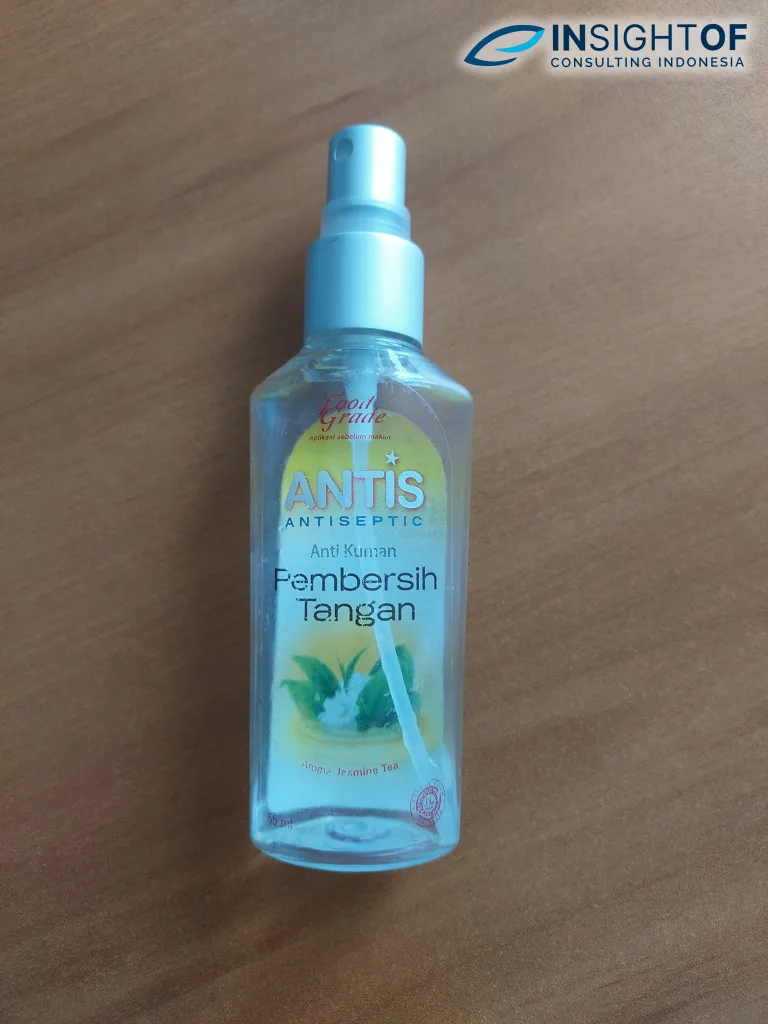
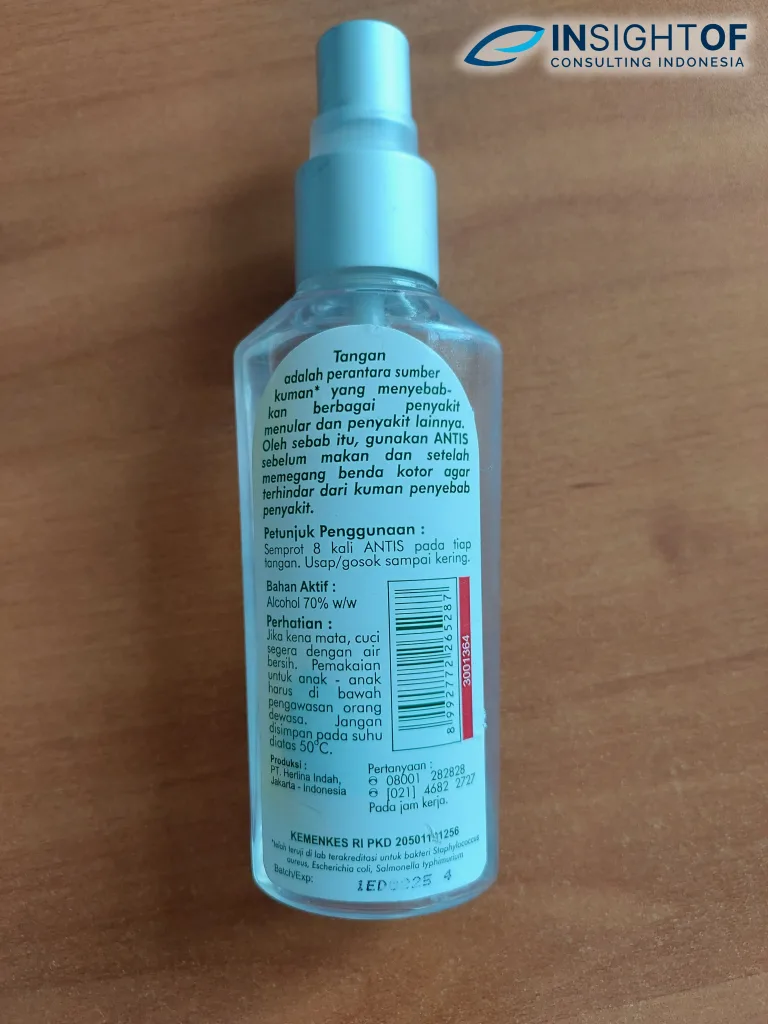
Example PKRT Product
⚙️ Step-by-Step: PKRT Registration Process
1. Identify Your Product Class
Determine the classification of your product under PKRT (Perbekalan Kesehatan Rumah Tangga) according to the category and its specific regulatory class (1A–3D), based on product risk and intended use.
2. Prepare the Necessary Documents
Gather and prepare the following:
- Company registration and licensing documents
- Product specifications and labelling
- Risk classification and assessment reports
- Clinical trial data (for Class 2C & 3D)
- Declaration of Conformity
3. Submit Your Application
Apply through the Directorate General of Pharmaceutical and Medical Devices (Regalkes) system under the Ministry of Health (Kemenkes RI).
4. Pay the PNBP Fee
Complete payment of the Non-Tax State Revenue (PNBP) fee.
5. Receive Your License Certificate
After evaluation and approval, you will obtain your PKRT marketing authorization certificate, allowing your product to be officially distributed in Indonesia.
🕌 Halal Certification Requirement for PKRT Products
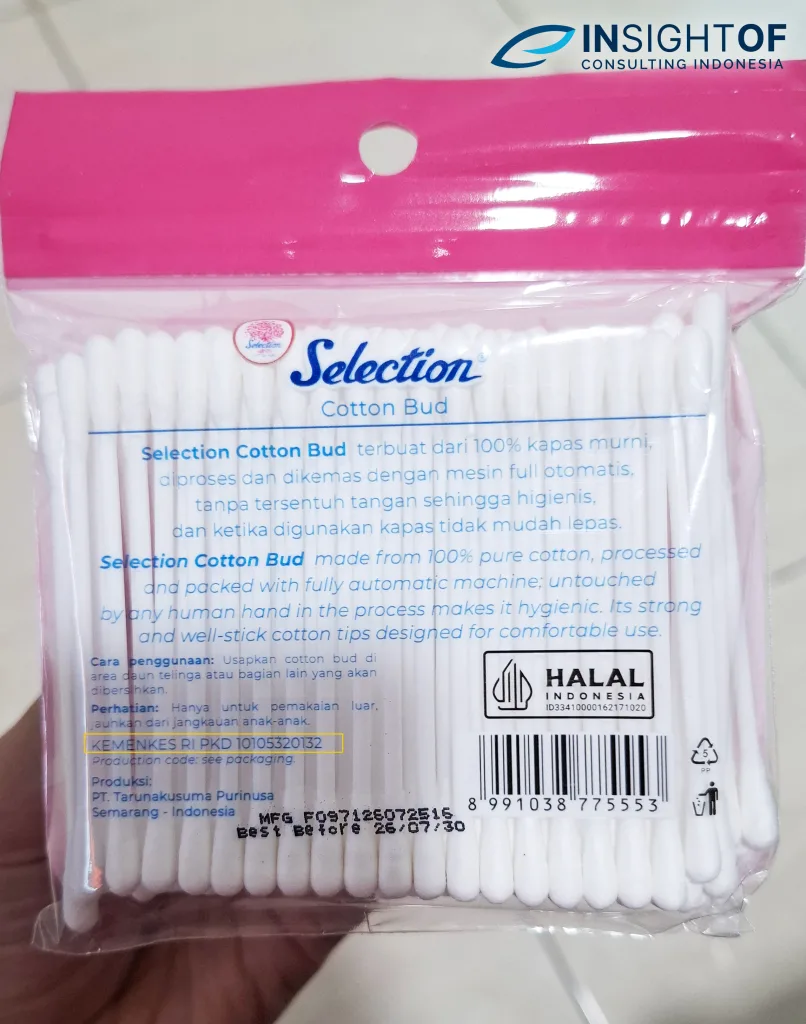
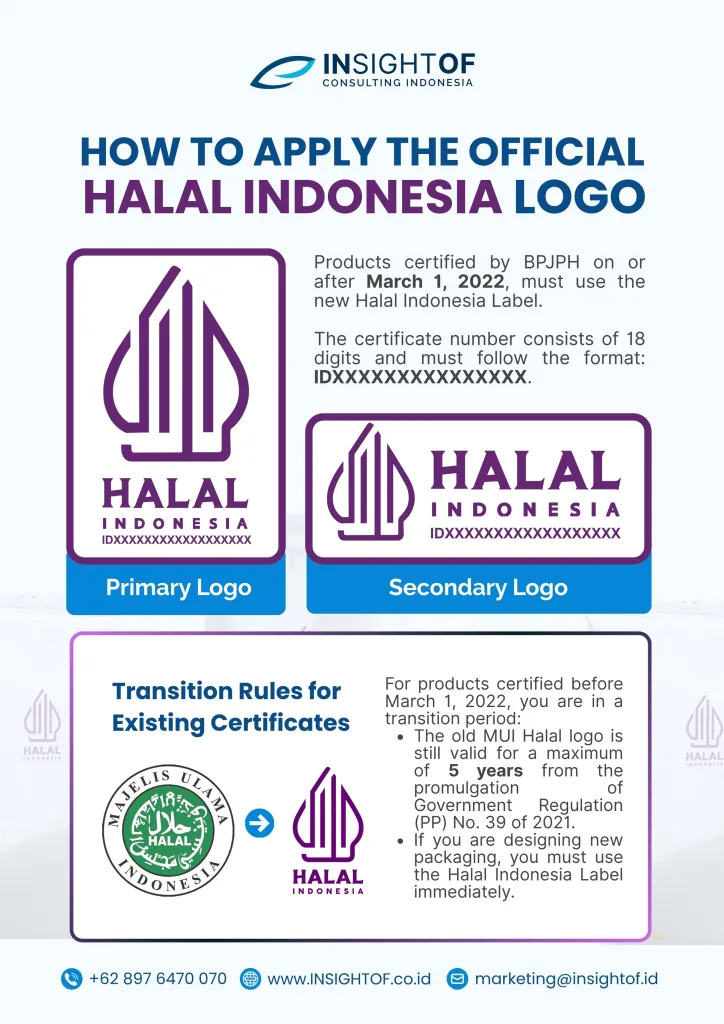
Starting 17 October 2025, Halal Certification becomes mandatory for all PKRT products containing materials of animal origin or those that come into contact with consumers.
Companies must ensure that their materials, production processes, and facilities comply with Indonesia’s Halal Product Assurance Law (UU JPH) and its derivatives.
This includes:
- Ensuring halal-certified raw materials and manufacturing facilities.
- Applying for halal certification through BPJPH (Halal Product Assurance Organizing Agency).
- Displaying the Halal label on the product packaging once certified.
Products not meeting halal requirements must include a clear “Non-Halal” statement on the label.
🏷️Why Compliance Matters
Proper registration and labeling are not only legal obligations but also protect public health. Companies that comply with PKRT regulations demonstrate transparency, quality assurance, and consumer responsibility — building long-term trust in both local and global markets.
INSIGHTOF provides end-to-end assistance for PKRT and Halal certification, including dossier preparation, risk classification, document review, and product label evaluation.
If your company plans to distribute or import household health products in Indonesia, our expert team is ready to guide you through every step of the process.
📩 Contact us for consultation on PKRT product registration and labeling compliance.
Do you need assistance registering your product in Indonesia?
Contact us today to start your registration process.



.svg/240px-YouTube_social_red_squircle_(2017).svg.png)