Since 2016, ICI has supported more than 1,000 BPOM, Halal, and Medical Device registrations in Indonesia.
10 Years Experience / Certification Consulting Expert / Based in Jakarta
These questions are common among international dairy exporters entering Indonesia.
In Indonesia, milk is not defined by marketing terminology. It is defined by measurable chemical composition. A minor deviation in fat or protein percentage can change the product category entirely. Selecting the wrong category at the beginning can result in rejection of the NIE (Nomor Izin Edar / Marketing Authorization Number) application.
Understanding food categorization is therefore not an administrative formality. It is a strategic regulatory decision.
Legal Definition of Milk Under Indonesian Regulation
Under BPOM Regulation No. 13 of 2023 concerning Food Categories, milk is defined as liquid derived from the mammary glands of milk-producing animals such as cows, buffalo, goats, sheep, and other livestock suitable for human consumption.
Milk may be distributed in fresh form or after heat processing, including pasteurization, ultra-high temperature (UHT) treatment, or sterilization.
This definition includes processed and unprocessed dairy milk. However, infant formula and certain specialized nutrition products are excluded from the general milk category and fall under separate classifications.
Regulatory Framework
Milk classification in Indonesia is governed primarily by:
- BPOM Regulation No. 13 of 2023 on Food Categories
- Head of BPOM Decree No. 70 of 2025, which updates and refines food category definitions, including plant- and animal-based raw materials
These regulations determine how a product must be categorized before NIE registration.
Milk Product Categories (Category 01.0)
01.1.1 Plain Milk
Milk that does not contain added food ingredients except milk constituents. No flavoring agents or sweeteners are permitted.
01.1.2 Other Plain Milk
Milk that may contain limited non-milk ingredients that do not contribute taste. Flavoring agents remain prohibited.
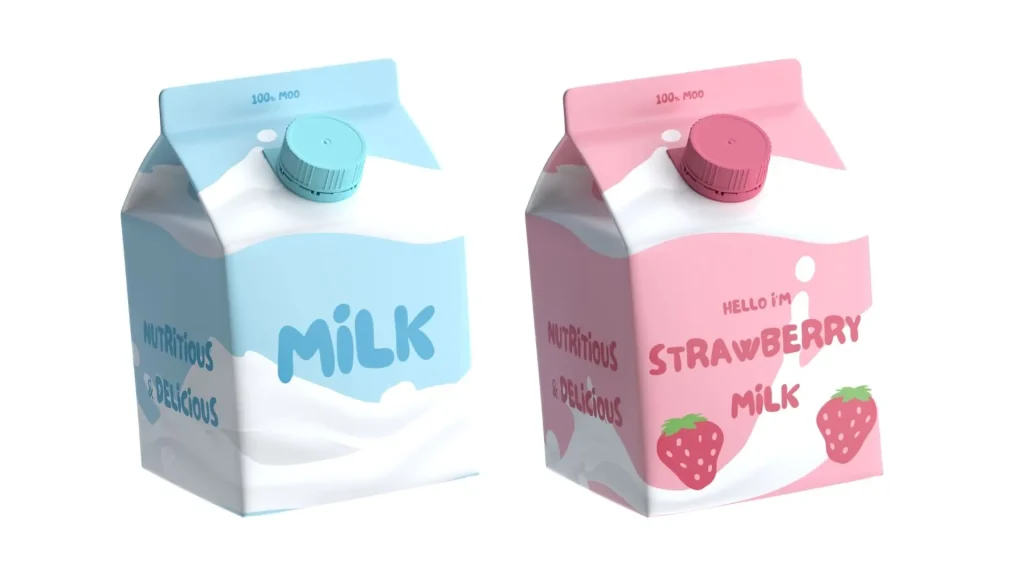
01.1.4 Flavored Milk Beverages
Milk-based ready-to-drink products containing flavoring agents or other ingredients that contribute taste. Once flavoring is added, the product is no longer categorized as plain milk.
Technical Composition Requirements (2025 Update)
Product classification is determined by laboratory results.
| Product Type | Milk Fat | Protein (N x 6.38) | Milk Solids-Non-Fat |
|---|---|---|---|
| Full Cream Milk | Minimum 3.0% | Minimum 2.7% | Minimum 7.8% |
| Partial Skim Milk | 0.6% – <2.9% | Minimum 2.7% | — |
| Skim Milk | Maximum 0.5% | Minimum 2.7% | — |
| Milk Beverage | 1.2% – <2.0% | Minimum 1.0% | Minimum 4.4% |
| Drink Containing Milk | Minimum 0.3% | Minimum 0.27% | Minimum 0.78% |
| Milk-Flavored Drink | <0.3% | Not Required | Not Required |
Even a small deviation, such as 0.1% below the minimum protein requirement, may shift the category from “Milk” to “Beverage.”
BPOM assessment relies strictly on laboratory data.
Reconstituted and Recombinant Milk
Recombined milk is produced by combining milk fat and non-fat milk solids, with or without added water, to achieve a defined composition.
Reconstituted milk is produced by adding water to milk powder or evaporated milk to restore its original proportion.
Both are permitted within milk categories provided that the final composition meets regulatory thresholds.
Flavored Milk and Beverage Classification
Flavored milk products may fall under Category 14.0 (Beverages) if milk fat content is below 0.3%.
When this occurs, the product is no longer categorized as a dairy product, regardless of branding or marketing presentation.
This distinction is one of the most common causes of registration complications for imported products.
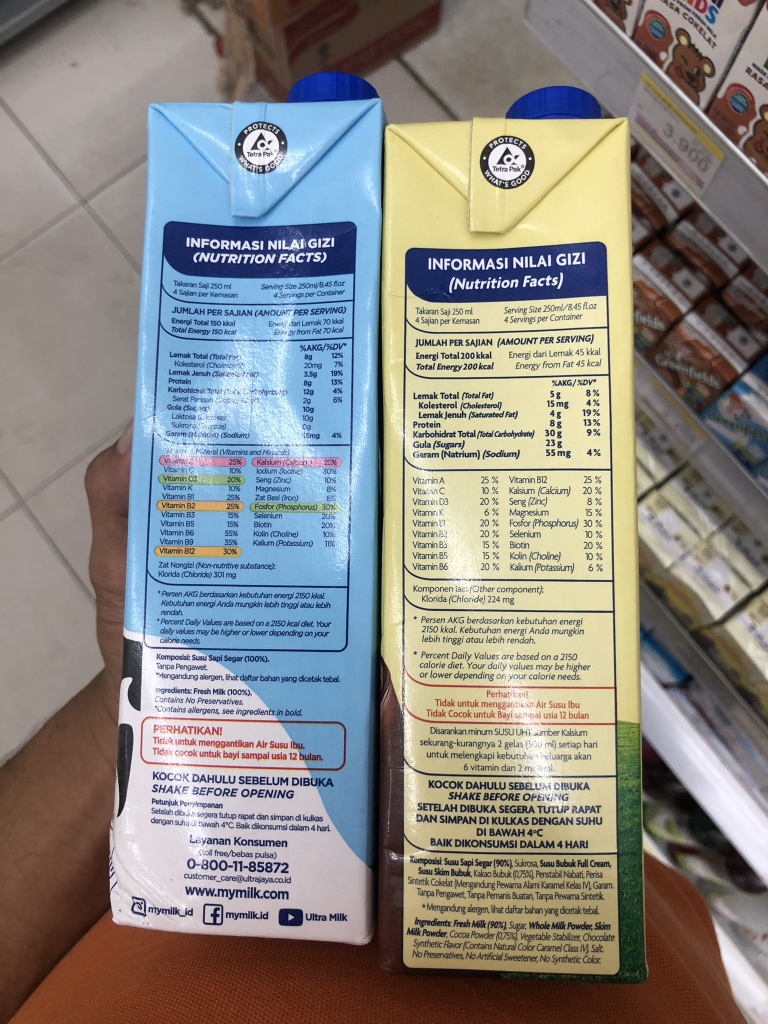
Mandatory Indonesian Language Labeling
All product information must be presented in Bahasa Indonesia.
For dairy products:
- Nutrition Information Facts (Informasi Nilai Gizi) are mandatory
- The format must follow BPOM guidelines
- Claims must align with the approved category
Labeling inconsistencies frequently result in evaluation delays.
Frequently Asked Questions
Q: Can plant-based products such as oat or almond milk be registered under dairy category 01.0?
A: No. The term “milk” under Indonesian regulation refers exclusively to liquid derived from dairy animals. Plant-based beverages fall under separate categories. The use of the term “milk” in branding may trigger objections during evaluation.
Q: Is halal certification mandatory for dairy products?
A: Yes. Under Indonesia’s mandatory halal implementation framework, dairy products are considered animal-derived and subject to halal certification requirements. Without a recognized halal certificate, market entry may be significantly restricted.
Q: Can imported dairy products use international labeling formats?
A: No. All food products distributed in Indonesia must comply with BPOM labeling format requirements, including Nutrition Information Facts (Informasi Nilai Gizi) presented in Bahasa Indonesia.
In Indonesia, milk classification is a technical regulatory matter governed by measurable composition standards. Marketing terminology does not determine category status; laboratory results do.
Early regulatory assessment reduces the risk of rejection, relabeling costs, and delays in market entry.
Understanding the correct food category is the first and most critical step in securing marketing authorization in Indonesia.
Insightof #PT.ICI #INSIGHTOF #ICI #BPOM #MilkRegulation #MilkMarketingAuthorization #UHTMilk #PasteurizedMilk #MilkBeverage #FoodCategory #BPOM132023 #BPOM702025 #HalalCertification #BPJPH #MilkImport #BPOMConsultant #IndonesianBusiness #KoreanInvestment #FoodLabeling #NutritionClaims #SkimMilk #FullCream #DairyIndustry #IndonesiaTrade #ReconstitutedMilk #RecombinedMilk #MLPermit #MDPermit