Introduction
Since 2016, ICI has supported more than 1,000 BPOM, Halal, and Medical Device certifications for both local and international brands. Based in Jakarta, our team specializes in guiding businesses through Indonesia’s regulatory system to ensure full legal compliance.
10 Years Experience / Certification Consulting Expert / Based in Jakarta
Problem Statement: Why Halal Certification Still Causes Confusion
“I thought MUI was the only authority for Halal certification?”
This is one of the most common assumptions we hear from cosmetics brands entering the Indonesian market.
Under Law No. 33 of 2014 on Halal Product Assurance (JPH), Indonesia fundamentally changed its Halal certification system. What was once a voluntary, religion‑driven process is now a mandatory, government‑regulated framework involving multiple institutions.
Many cosmetic companies experience costly delays because they:
- Assume a Halal Fatwa is the same as a Halal Certificate, or
- Do not understand the workflow between BPJPH, LPH, and MUI.
With the mandatory Halal deadline for cosmetics set for 17 October 2026, misunderstanding these roles can result in regulatory sanctions, rejected submissions, or exclusion from the Indonesian market.
Understanding Indonesia’s Three‑Party Halal Certification System
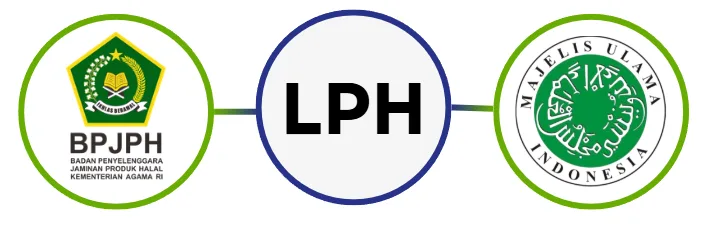
Indonesia’s Halal certification operates through a structured collaboration between government authorities, technical auditors, and religious scholars. Each institution has a clearly defined and non‑overlapping role.
 1. BPJPH – Halal Product Assurance Organizing Body
 1. BPJPH – Halal Product Assurance Organizing Body
Badan Penyelenggara Jaminan Produk Halal (BPJPH) is a Non‑Ministerial Government Institution (LPNK) under the Ministry of Religious Affairs and is directly accountable to the President of the Republic of Indonesia. Its authority is established under Presidential Regulation No. 153 of 2024, implementing Law No. 33 of 2014.
BPJPH acts as the central administrator and final authority in the Halal system.
Key Responsibilities:
- Application Gateway: All Halal certification applications begin through the SIHALAL system under BPJPH.
- Policy & Standard Setter: Formulates and enforces Halal Product Assurance (JPH) policies, norms, standards, procedures, and criteria.
- Certificate Issuance: The only institution legally authorized to issue, register, suspend, or revoke Halal Certificates and Halal Labels.
- Accreditation & Oversight: Accredits LPH institutions and registers Halal Auditors.
- Domestic & International Cooperation: Coordinates with ministries, local governments, foreign authorities, and international Halal bodies.
In short, no Halal Certificate exists without BPJPH.
2. LPH – Halal Inspection Agency
Lembaga Pemeriksa Halal (LPH) functions as the technical and scientific examiner in the certification process. Multiple LPHs are accredited by BPJPH, including LPPOM MUI, Sucofindo, Surveyor Indonesia, and various universities and institutions.
While applicants may choose their LPH, all LPHs perform the same regulated technical role.
Key Responsibilities:
- On‑Site Audit & Inspection: Conducts factory audits to ensure Halal compliance and prevent cross‑contamination.
- Ingredient & Process Review: Verifies raw materials, suppliers, production flow, and the implementation of the Halal Assurance System (SJPH).
- Audit Reporting: Submits the Halal Audit Report (LHR) to MUI as the basis for religious deliberation.
LPH does not issue Halal certificates or religious rulings—it provides technical evidence.
Examples of Accredited LPHs
To illustrate the diversity of accredited Halal Inspection Agencies in Indonesia, the following are some commonly recognized LPHs used in cosmetic, food, pharmaceutical, and industrial product audits:
- LPH LPPOM MUI
- LPH Sucofindo
- LPH Surveyor Indonesia
- LPH Hidayatullah
- LPH YPM Salman ITB
- LPH UIN Sunan Kalijaga Yogyakarta
As of recent BPJPH data, more than 100 LPHs are officially accredited in Indonesia. Although companies may choose their preferred LPH during the SIHALAL application process, all LPHs operate under the same BPJPH standards, and their audit results must be reviewed through MUI’s Fatwa Commission before BPJPH can issue the final Halal Certificate.
3. MUI – Indonesian Council of Ulama
Majelis Ulama Indonesia (MUI) serves as the religious authority within the system.
Its role is strictly doctrinal and independent from administrative functions.
Key Responsibilities:
- Halal Fatwa Sessions: Reviews LPH audit findings through formal Fatwa Commission meetings.
- Religious Determination: Issues a Halal Decree (Ketetapan Halal) confirming whether a product complies with Islamic law (Sharia).
This Halal Decree is a mandatory legal prerequisite. Without it, BPJPH cannot issue a Halal Certificate.
Halal Certification Responsibility Matrix
| Institution | Authority Type | Primary Role | Core Output |
|---|---|---|---|
| BPJPH | Government / Administrative | Manages applications & issues certificates | Halal Certificate & Label |
| LPH | Technical / Scientific | Audits facilities & ingredients | Halal Audit Report |
| MUI | Religious / Scholarly | Determines Sharia compliance | Halal Decree (Fatwa) |
Frequently Asked Questions (FAQ)
Q1: Can we choose our own LPH?
Yes. During registration in the SIHALAL system, applicants may select any BPJPH‑accredited LPH.
Q2: Is the Halal Certificate valid for life?
Yes—with conditions. The Halal Certificate issued by BPJPH remains valid as long as there are no changes to ingredients, production processes, suppliers, or manufacturing facilities. Any change requires an update or re‑certification.
Q3: Who controls the Halal logo on cosmetic packaging?
BPJPH issues the official Halal Certificate, including the certificate number and authority to apply it.
In practice, products must display the halal logo that corresponds to the BPJPH-issued certificate.
The logo regulation itself, including design and usage conditions, was also formalized via BPJPH (e.g., through decisions on halal logo identity).
Regarding BPOM’s role:
BPOM does not issue the logo, but as the product regulator, it monitors compliance with labeling rules during the product notification and post-market monitoring process — ensuring labels are legally compliant and honestly displayed. BPOM’s collaboration with BPJPH for halal compliance and label oversight is documented.
How ICI Supports Your Halal Certification
Managing three institutions under a fixed 2026 deadline can be operationally complex. ICI provides end‑to‑end support, including:
- Pre‑Audit Ingredient Risk Assessment – Early identification of high‑risk ingredients such as animal‑derived surfactants or alcohol sources.
- SIHALAL System Management – Accurate and compliant data entry within BPJPH’s portal.
- SJPH Documentation Preparation – Development of Halal Assurance System manuals required for LPH audits.
- LPH Selection Strategy – Advisory on selecting the most suitable LPH for your cosmetic category.
Indonesia’s Halal system has fully transitioned from a single‑authority model to an integrated BPJPH–LPH–MUI framework. Companies that attempt to navigate this structure independently often face administrative deadlocks and missed timelines.
Partnering with a professional consultant like ICI ensures your cosmetic products are fully prepared for mandatory Halal enforcement in 2026—without costly disruptions.
Website: www.insightof.co.id
Email: marketing@insightof.co.id
Tags:
#INSIGHTOF #ICI #BPJPH #MUI #LPH #HalalCosmetics #IndonesiaHalal2026 #HalalCertification #SJPH #SIHALAL #LPPOMMUI #MandatoryHalal #CosmeticRegistration #KBeautyIndonesia #HalalLaw #JakartaConsultant