Since 2016, INSIGHTOF has supported more than 1,000 BPOM, Halal, and Medical Device certifications for local and international brands. Based in Jakarta, we specialize in helping companies achieve full regulatory compliance for the Indonesian market.
10 Years Experience / Certification Consulting Expert / Based in Jakarta
Many hair care brands still assume that Halal certification applies only to food or skincare. This is a costly misconception.
The Indonesian government has made its position clear: all cosmetic products, including shampoos, conditioners, hair treatments, serums, and hair dyes, are subject to mandatory Halal regulation.
One of the most common beliefs we encounter during consultations is that hair care products do not require Halal certification because they are rinse-off products. In reality, hair care formulations frequently contain critical animal-derived ingredients, and for Muslim consumers, wudhu-friendliness (water permeability) is a non-negotiable requirement.
If you intend to sell hair care products in Indonesia after 2026, Halal compliance is no longer optional.
Definition and Scope of Hair Care Products
According to Indonesian regulations, cosmetics are substances intended for use on the external parts of the human body, including the hair and epidermis, to clean, perfume, change appearance, or protect the body.
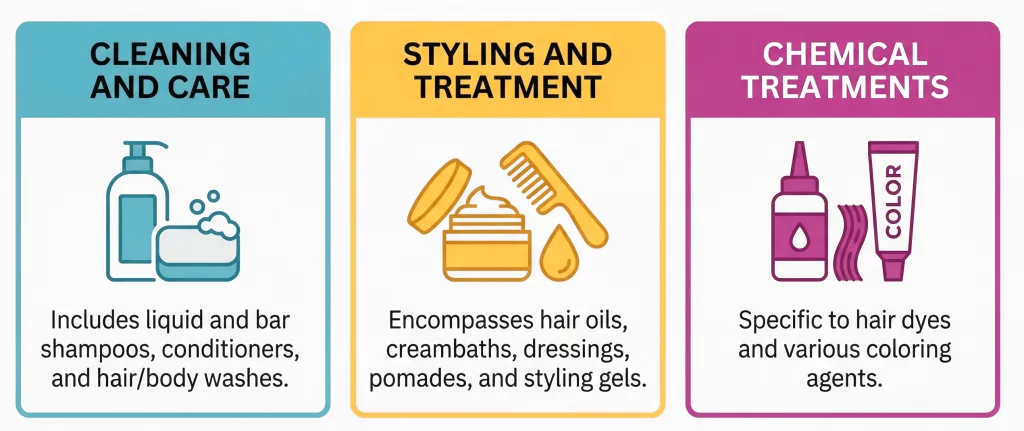
Specific hair care products that fall under this definition and are subject to regulation include:
- Cleaning and Care: Shampoos (liquid and bar), hair conditioners, and hair and body washes.
- Styling and Treatment: Hair oils, hair creams (creambath), hair dressings, pomades, and hair styling gels.
- Chemical Treatments: Hair dyes and coloring agents
The Mandate for Halal Certification
Under Government Regulation No. 39 of 2021, products that enter, circulate, and are traded in Indonesia must be halal certified. This mandate applies to cosmetics, including hair care items.
Mandatory Halal certification for cosmetic products, including hair care, will be fully enforced starting October 17, 2026.
This requirement applies to:
- Locally manufactured products
- Imported cosmetic products
- OEM and private-label brands
After this date, products that do not hold a Halal certificate or do not clearly declare Non-Halal status may face administrative sanctions, including product withdrawal from the Indonesian market.
Although 2026 may appear distant, the Halal certification process—covering ingredient verification, Halal Assurance System (SJPH) implementation, audit scheduling, and fatwa issuance—typically requires 6 to 12 months. As the deadline approaches, application bottlenecks are inevitable. Early preparation is the only reliable strategy.
Implementation Timeline: The obligation for cosmetics to be halal certified is being implemented in stages. For cosmetics, which encompasses hair care products, the mandatory certification period began on October 17, 2021, and must be completed by October 17, 2026. Products circulating after this date must either bear a Halal label or a “Non-Halal” declaration if they contain prohibited ingredients
Critical Compliance Issues for Hair Care Products
Hair care products face unique Halal challenges. Based on audit experience, two issues most frequently cause certification failure.
1. Animal-Derived Ingredients
Common cosmetic ingredients such as Keratin, Collagen, Glycerin, and Stearic Acid must be fully traceable to their source.
- If animal-derived, documentation must prove the animal was slaughtered according to Islamic law.
- Porcine (pig-derived) ingredients are strictly prohibited and automatically disqualify products from Halal certification.
Ingredient ambiguity or incomplete traceability is one of the most common audit findings.
2. Water Permeability (Wudhu Compliance)
PP Nomor 39 Tahun 2021
For Muslim consumers, water must reach the hair and scalp during wudhu (ablution) prior to prayer.
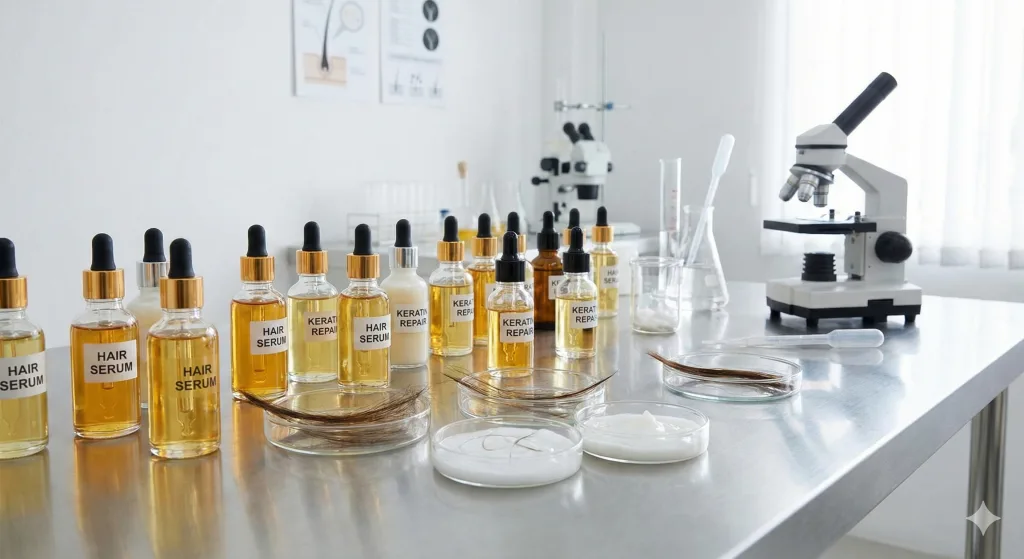
Hair dyes, serums, coatings, or treatments that create a waterproof or occlusive film may invalidate wudhu and therefore fail Halal compliance.
Products must demonstrate that they are water-permeable or breathable, often supported by formulation data or laboratory testing.
Note on Hair Dyes: Hair dyes often utilize complex chemical compounds like Phenylenediamines or Resorcinol (BPOM Regulation No. 23 of 2019). While these are synthetic, manufacturers must ensure no non-halal animal-derived additives or prohibited processing aids are used in their synthesis.
Halal vs. Non-Halal: Understanding Your Compliance Options
Not all cosmetic products can qualify for Halal certification.
If a formulation contains prohibited ingredients, such as porcine-derived gelatin or enzymes, Halal certification is not possible. However, Indonesian regulations still allow these products to be sold—provided strict labeling rules are followed.
Failing to declare a product’s Halal status is a legal violation.
Compliance Pathways Overview
| Category | Requirement | Labeling Rule |
|---|---|---|
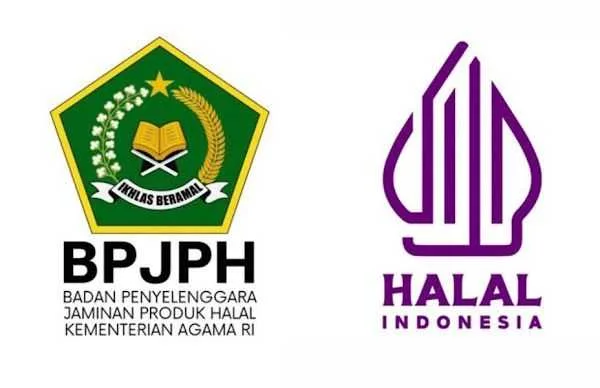
| Halal-Compliant | No prohibited ingredients; production free from cross-contamination | Must display the official Halal logo issued by BPJPH |
| Non-Halal | Contains prohibited ingredients (e.g., porcine derivatives) | Must display a clear Non-Halal label/symbol as regulated |
| Deadline | Mandatory compliance by October 17, 2026 | Non-compliance may result in market withdrawal |
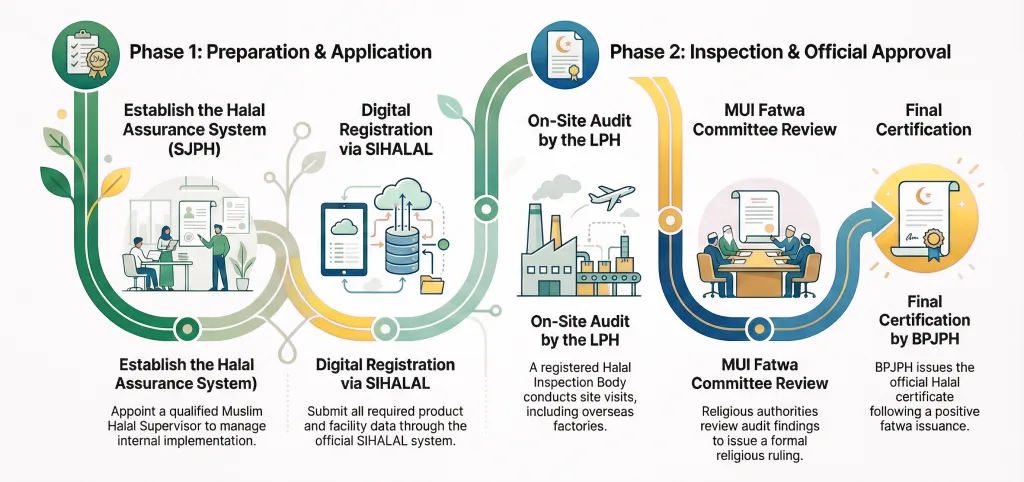
The Halal Certification Workflow
Halal certification involves multiple authorities and a structured process:
- Preparation
Implementation of the Halal Assurance System (SJPH) and appointment of a qualified Muslim Halal Supervisor. - Registration
Submission of product and facility data through the SIHALAL system. - Audit
On-site inspection by a registered Halal Inspection Body (LPH), including overseas factory visits where applicable. - Fatwa Issuance
Review and religious ruling by the MUI Fatwa Committee. - Certification
Official Halal certificate issued by BPJPH.
Frequently Asked Questions
Q1: Is Halal certification required if our hair care product is already BPOM-registered?
Yes. BPOM registration and Halal certification are separate regulatory obligations. BPOM approval confirms product safety and quality, while Halal certification evaluates ingredient origin, processing methods, and compliance with Islamic law. Products must comply with both regulations to remain on the Indonesian market after October 17, 2026.
Q2: We use porcine-derived hydrolyzed keratin. Is there any workaround?
No. Porcine ingredients cannot be Halal certified. Reformulation using plant-based or Halal-compliant animal sources is required, or the product must be registered as Non-Halal.
Q3: Does the Halal auditor need to visit our factory overseas?
Yes. Physical inspection of the manufacturing facility is mandatory to verify ingredient handling and prevent cross-contamination. Initial certifications rarely qualify for remote audits.
ICI Halal Compliance Services
Transitioning from BPOM compliance to Halal certification requires careful coordination. INSIGHTOF provides end-to-end support:
- Ingredient Pre-Assessment – Early identification of Halal risks before application
- SJPH Development – Documentation, procedures, and internal training
- Audit Coordination – Assistance during LPH audits
Preparing for 2026 starts today. With the right strategy, compliance does not need to disrupt your market presence.
Website: www.insightof.co.id
Email: marketing@insightof.co.id
Tags: #INSIGHTOF #HalalCosmetics #HairCareHalal #Halal2026 #BPJPH #SJPH #KBeautyIndonesia #CosmeticCompliance #HalalAudit #NonHalalLabeling